Art created by artificial intelligence has once again taken center stage following a recent auction hosted by the renowned auction house Christie’s.
Art created by artificial intelligence has once again taken center stage following a recent auction hosted by the renowned auction house Christie’s.
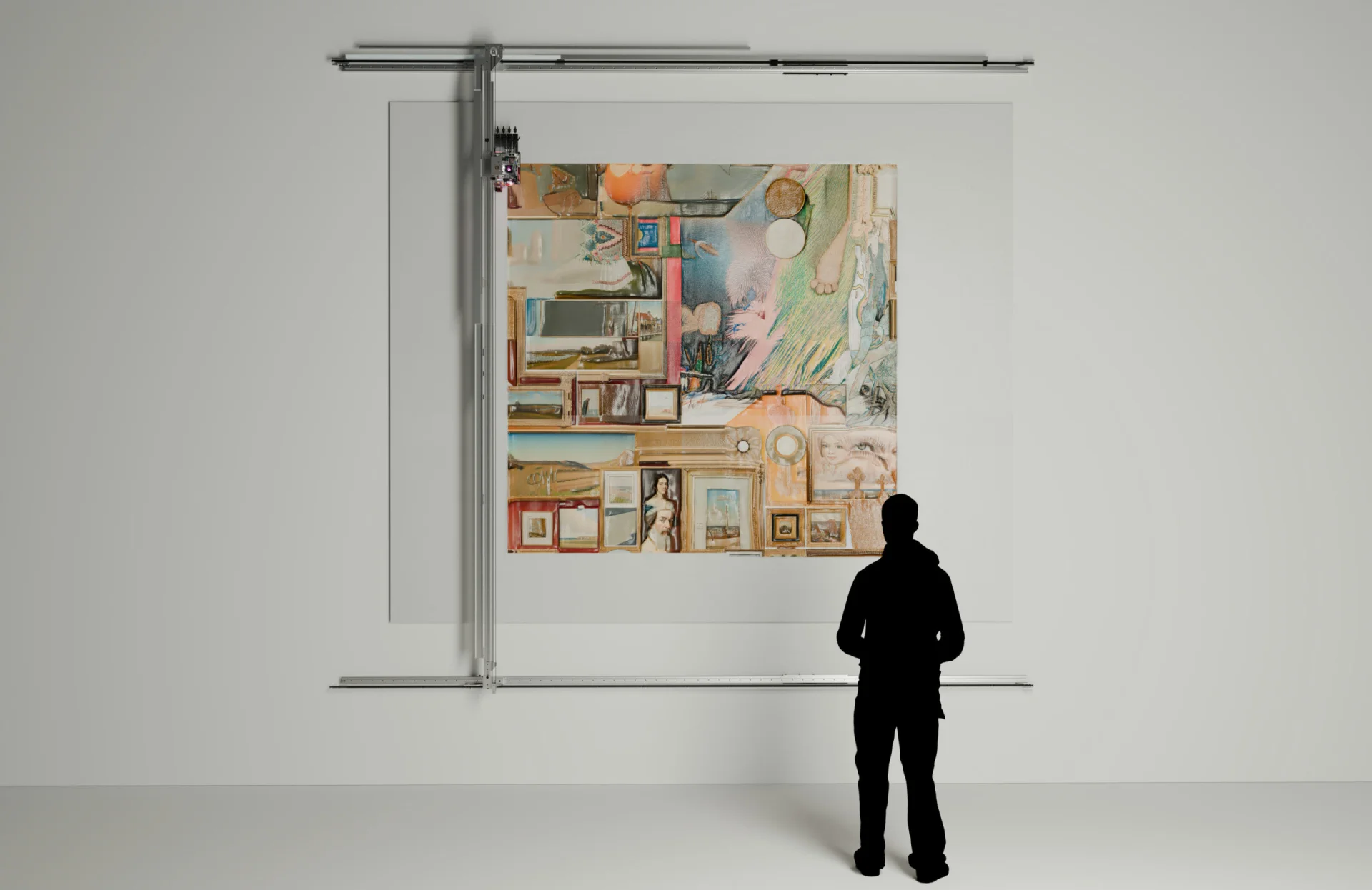
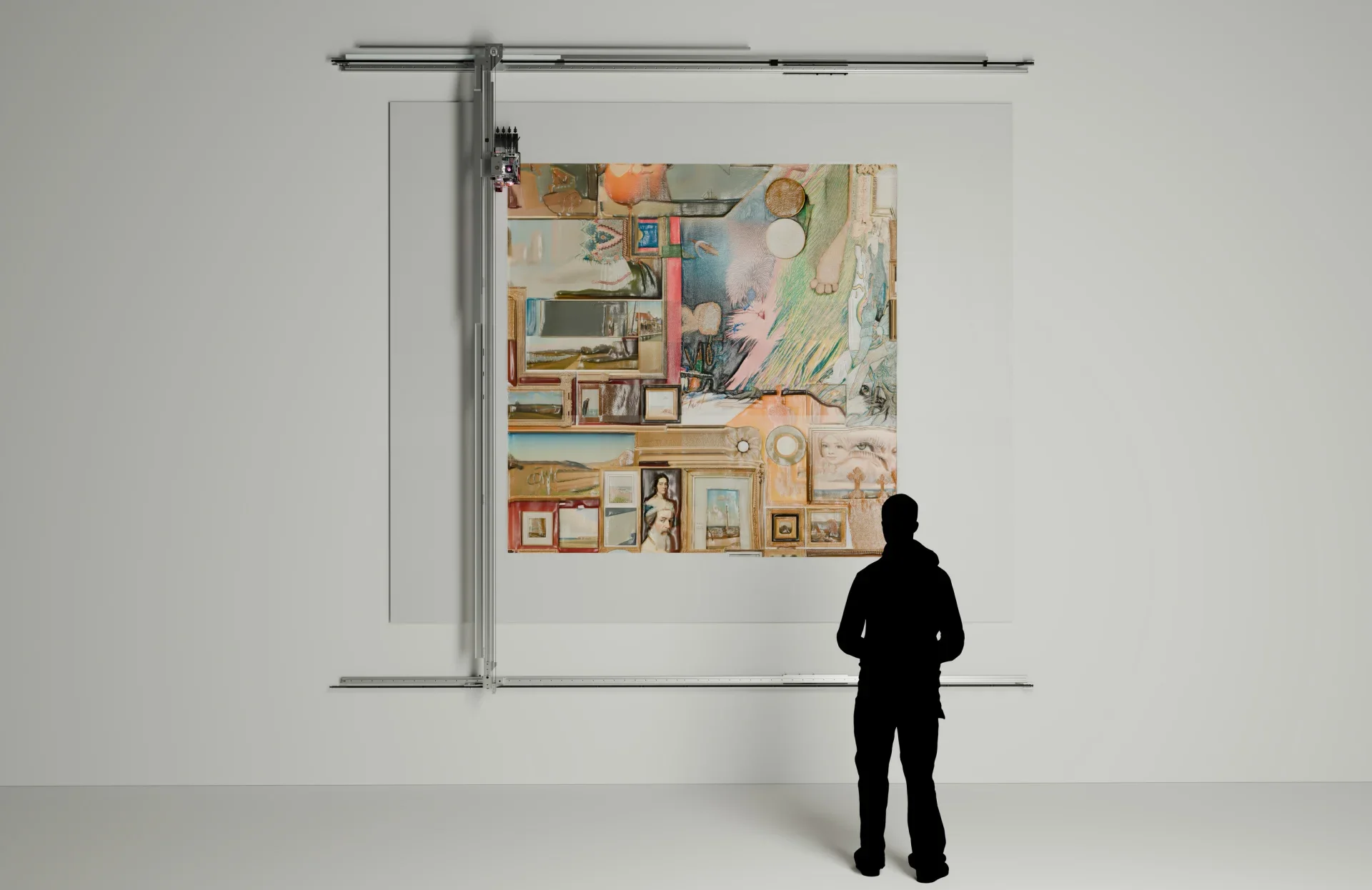 The Idea for Alexander Reben’s Painting, Rendered by a Robot
Written has previously explored the rise of Artificial Intelligence and its growing presence across the creative industries, including the art world. Art has long been viewed as a form of pure human expression—but when an artwork’s concept or execution involves algorithms, can it still be considered purely human-made? And can its creator still be regarded as an artist?
The question has resurfaced recently, once again through Christie’s. Last year, the auction house made headlines after selling Portrait of Edmond Belamy, a painting created with artificial intelligence. The work was generated by an AI algorithm trained on thousands of images, bringing together elements absorbed from the data to produce a new portrait.
In February, Christie’s held an auction dedicated to AI Art, titled Augmented Intelligence. The sale featured AI-generated art by 34 digital artists, including a work by someone widely considered a pioneer of AI art.
That artist was Harold Cohen, who in 1973 created an image using a prototype artificial intelligence program he named AARON. Christie’s offered one of Cohen’s works—or perhaps more accurately, a sketch—titled Untitled (i23-3758), created in 1987.
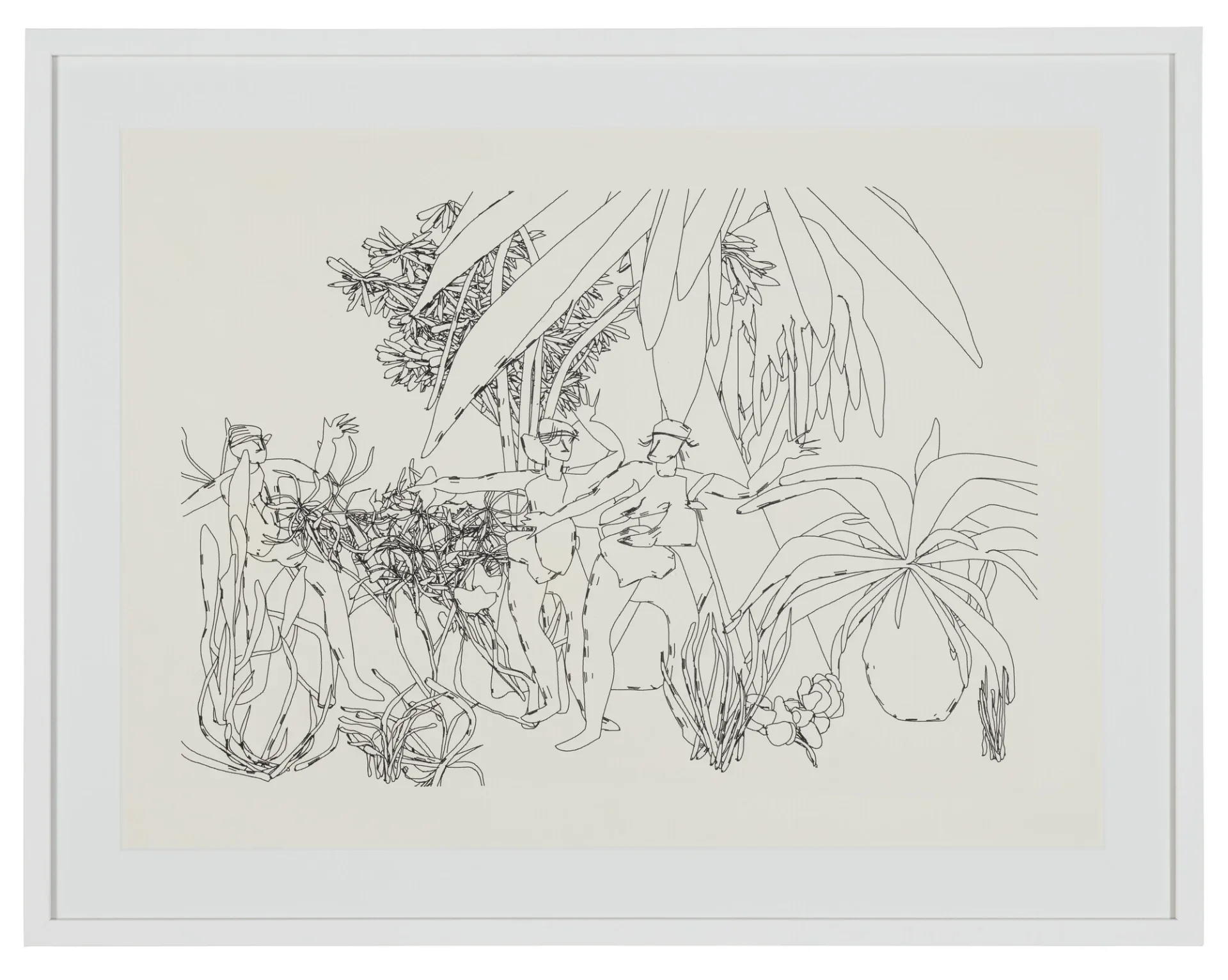 Harold Cohen “Untitled (123 – 3758)”
And how times have changed, sometimes seemingly overnight. Today, AI-generated art is no longer limited to simply feeding keywords into an AI program (like Midjourney or Sora) and letting a battalion of algorithms act like a digital genie to fulfill a prompt.
Nor is it just about creating NFT (Non-Fungible Token) collections that occasionally offer absurd pieces. At the Christie's auction, one AI artwork stood out thanks to its sheer element of innovation, novelty, and the sophisticated artificial intelligence technology behind it.
The piece was created by artist and roboticist Alexander Reben. Utilizing his expertise, he crafted a "semi-finished" painting that dynamically expanded (using outpainting techniques) every time the bidding increased by $100. To complete the painting, a robot applied oil paint onto a 10x20 canvas.
Welcome to the digital art era.
Naturally, hosting an AI-generated art event at a prestigious institution like Christie’s drew sharp criticism from traditional artists. As many as 6,400 artists submitted an open letter to Christie’s stating, “Many of the artworks you plan to auction were created using AI models that are known to be trained on copyrighted work without a license.” Their concerns deserve serious consideration, as the widespread adoption of AI has noticeably eroded earning opportunities for traditional creators.
Can art and technology peacefully coexist? According to Christie’s digital art director, Nicole Sales Giles, harmony is possible. She views the rise of AI as an inevitable evolution, noting that throughout art history—particularly regarding copyright—artists have long drawn inspiration from the works of others.
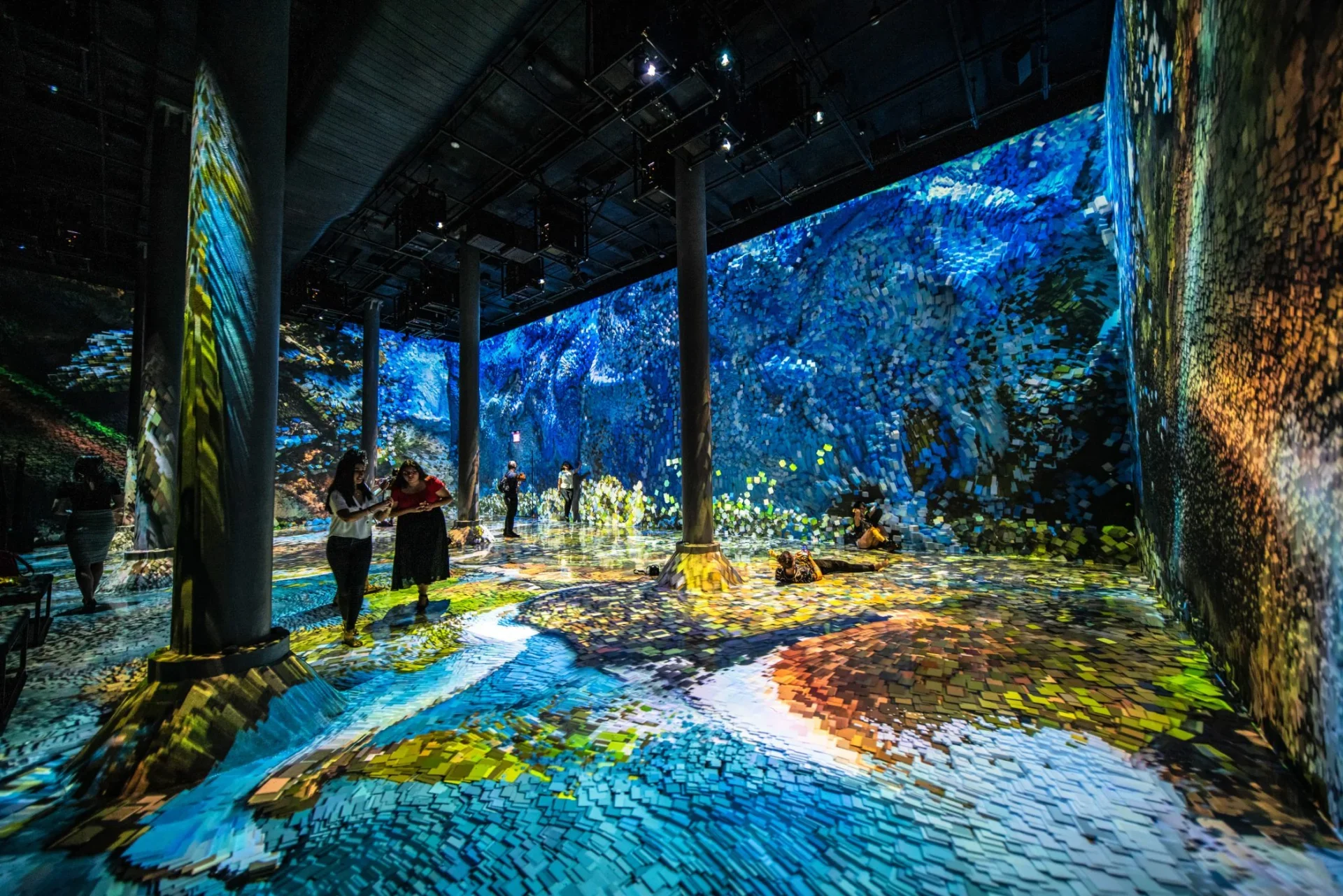 “Machine Hallucinations – ISS Dreams” – Refik Anadol
Copyright issues remain a central debate surrounding AI art, largely because the underlying algorithms tend to scrape data from a vast array of online images and information. However, two AI pieces featured in Christie’s Augmented Intelligence auction push back against doubts regarding authenticity.
Refik Anadol’s “Machine Hallucinations – ISS Dreams” relies exclusively on publicly available photographs from the International Space Station. Meanwhile, Pindar Van Arman’s “Emerging Face” presents a composite painting created by two AI agents: one attempts to generate a face, while the second halts the process the moment a visage begins to take shape. The result? Hauntingly captivating.
So, is it art?
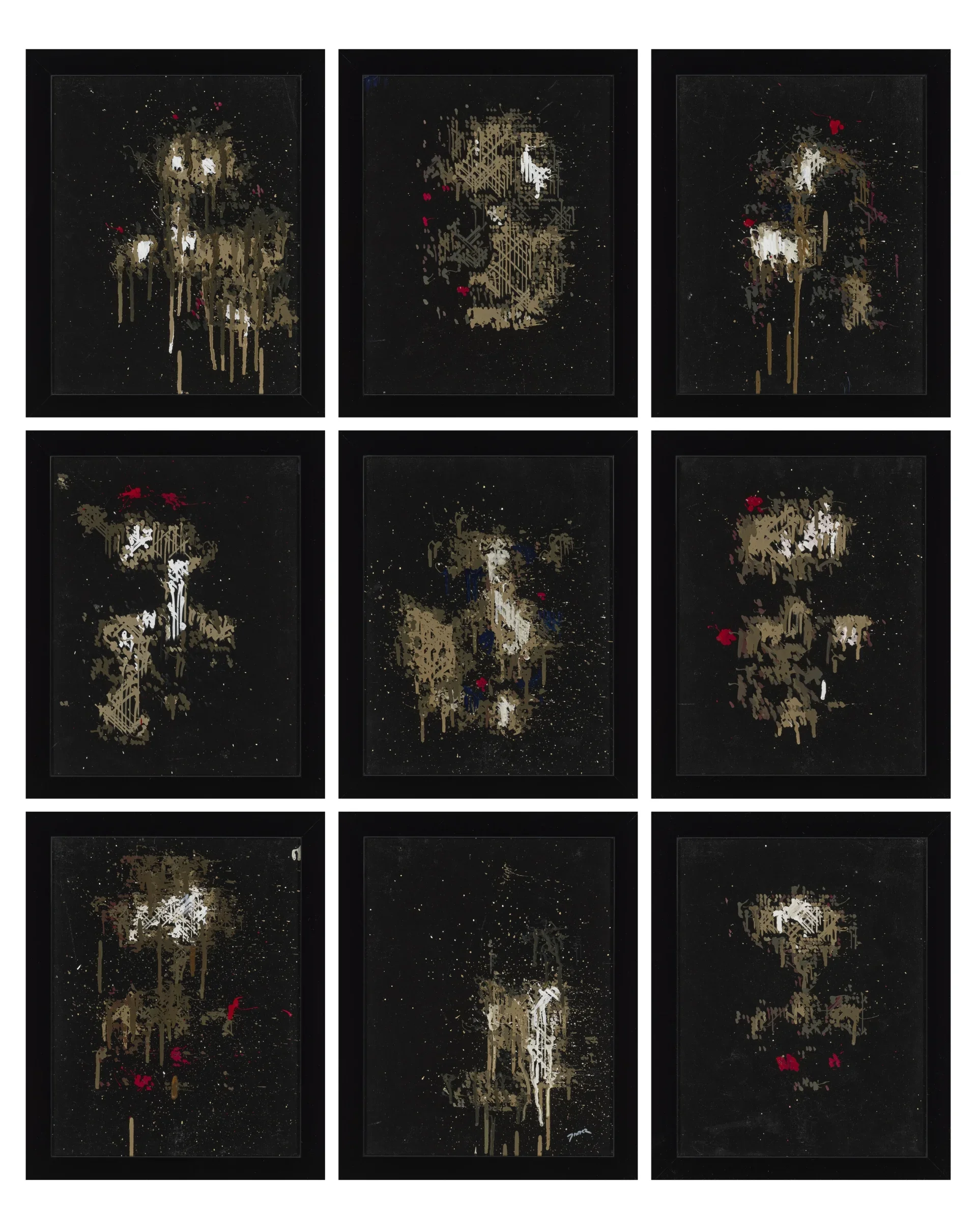 “Emerging Faces” – Pindar Van Arman
Once again, that remains the central question in the debate over the legitimacy of artificial intelligence art when placed alongside works crafted directly by human hands. It is undeniable that something feels "missing" in AI-generated art. It may be visually striking and still evoke emotion, but it often feels a little too "clean."
Even so, the art world—much like any other field—is hardly immune to innovation. Just as shifts in artistic movements have historically reflected or adapted to the societal and lifestyle changes of their era, AI art can be viewed as simply the latest evolution in the story of art.
Now, the lingering question is: are we ready to embrace it, or not?