Check our conversation with the curators of ArtJog 2025, Bambang Toko and Hendro Wiyanto, covering everything from the meaning behind the exhibition’s theme to the works they like.
ArtJog 2025 takes on the overarching theme Motif: Amalan. This theme marks the final chapter of the Motif trilogy. The Motif series was first introduced in 2023 with Motif: Lamaran, when artists were “proposed to” to present their works.
A year later came Motif: Ramalan, when many artists’ works seemingly became “prophecies” or somehow managed to predict what would happen in the future. Was it really a coincidence?
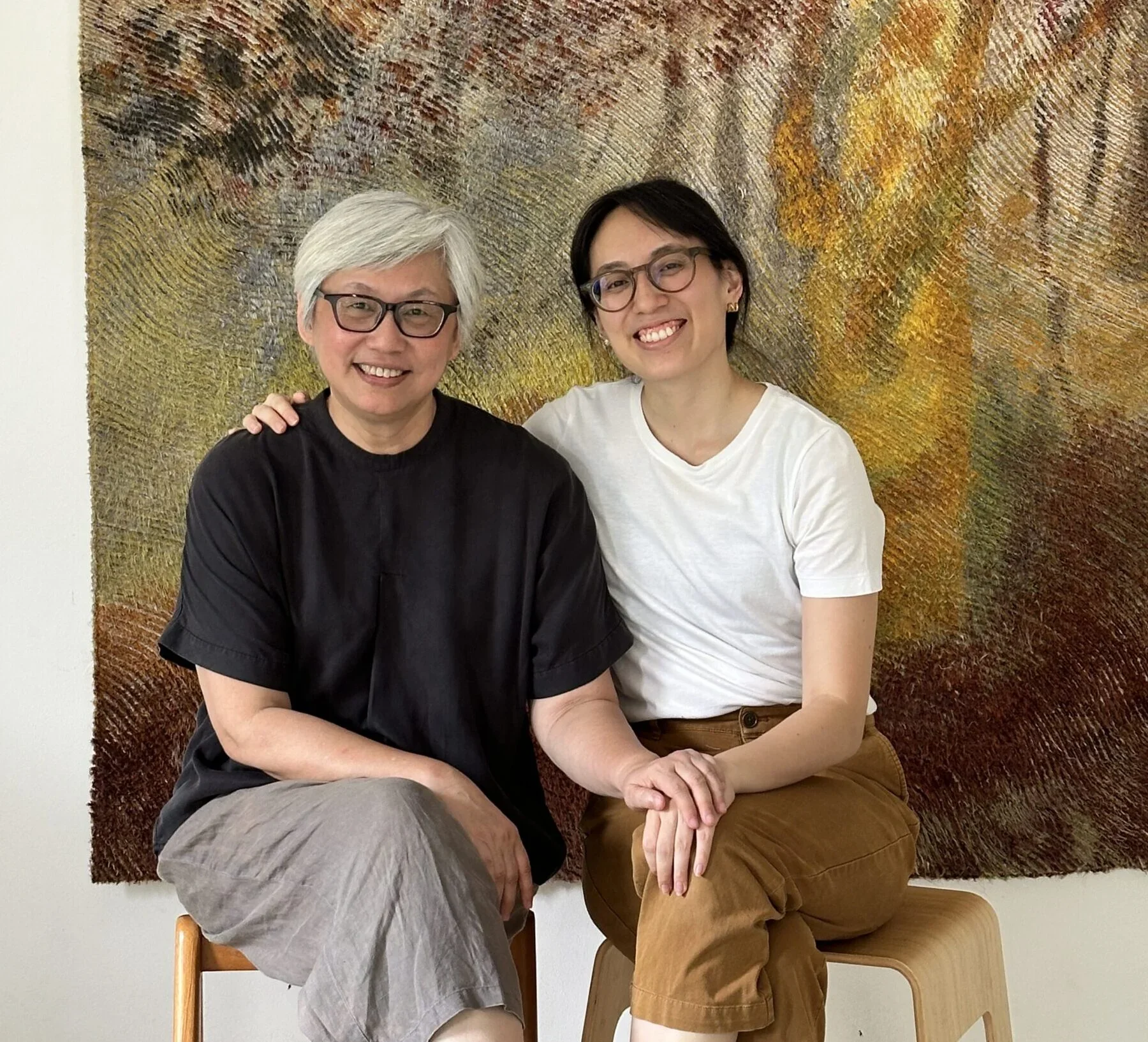
This time, to learn more about Motif: Amalan, we spoke with the two curators behind the exhibition. The first is Hendro Wiyanto, the guest curator behind the Motif trilogy, and Bambang ‘Toko’ Witjaksono, ArtJog’s permanent curator.
 Bambang ‘Toko’ Witjaksono dan Hendro Wiyanto
About the Motif: Amalan Theme of ArtJog 2025
Written: Amalan at ArtJog 2025 concludes the three-year thematic series. Can you tell us about the moment when you felt that it had all come together? A moment that made you think, “Yes, this is why we created Amalan.”
Hendro Wiyanto (HWB): Actually, it is not only the word ‘amalan’ that matters, but also ‘motif’. Just like with ArtJog in 2023 and 2024, it is not only ‘lamaran’ (2023) and ‘ramalan’ that we need to pay attention to, but once again, ‘motif’ itself, something less visible. For the organizers, what is the motif behind making this festival? And for the artists, what is their motif for accepting an invitation from ArtJog? What kind of relationship exists between those organizing the event and the artists being invited?
In the past, a number of writers and critics, dating back to the colonial era, liked to make predictions about the future of Indonesian art. Why make predictions in the first place? Artists, too, naturally enjoy imagining the future, the apocalypse, predicting a second life, obsessing over immortality, and so on. These kinds of motifs, the idea of knowing something before it happens, weruh sakdurunge winarah, are also strongly embedded in traditions such as babad, serat, jangka, and others. Now, is there anyone who knows more than AI? And what is there left to predict? The three ‘motifs’ of ArtJog are interesting to keep discussing, and they are by no means something new.
Bambang Toko Witjaksono (BTW): Yes, this was actually planned from the beginning. The Motif theme was conceived as a trilogy: Lamaran, Ramalan, and Amalan. But Amalan in particular is closely connected to the current social, political, and cultural conditions.
For me, amalan refers to the role of art or artists, whether within the art world, society, or the environment. Many artists have explored this idea, but the works in this edition tend to focus more on processes and activations. That is why, in terms of the format, if the previous edition featured more completed works, this one includes both artifacts and activities, making amalan more visible. That is why there are so many activities this time.
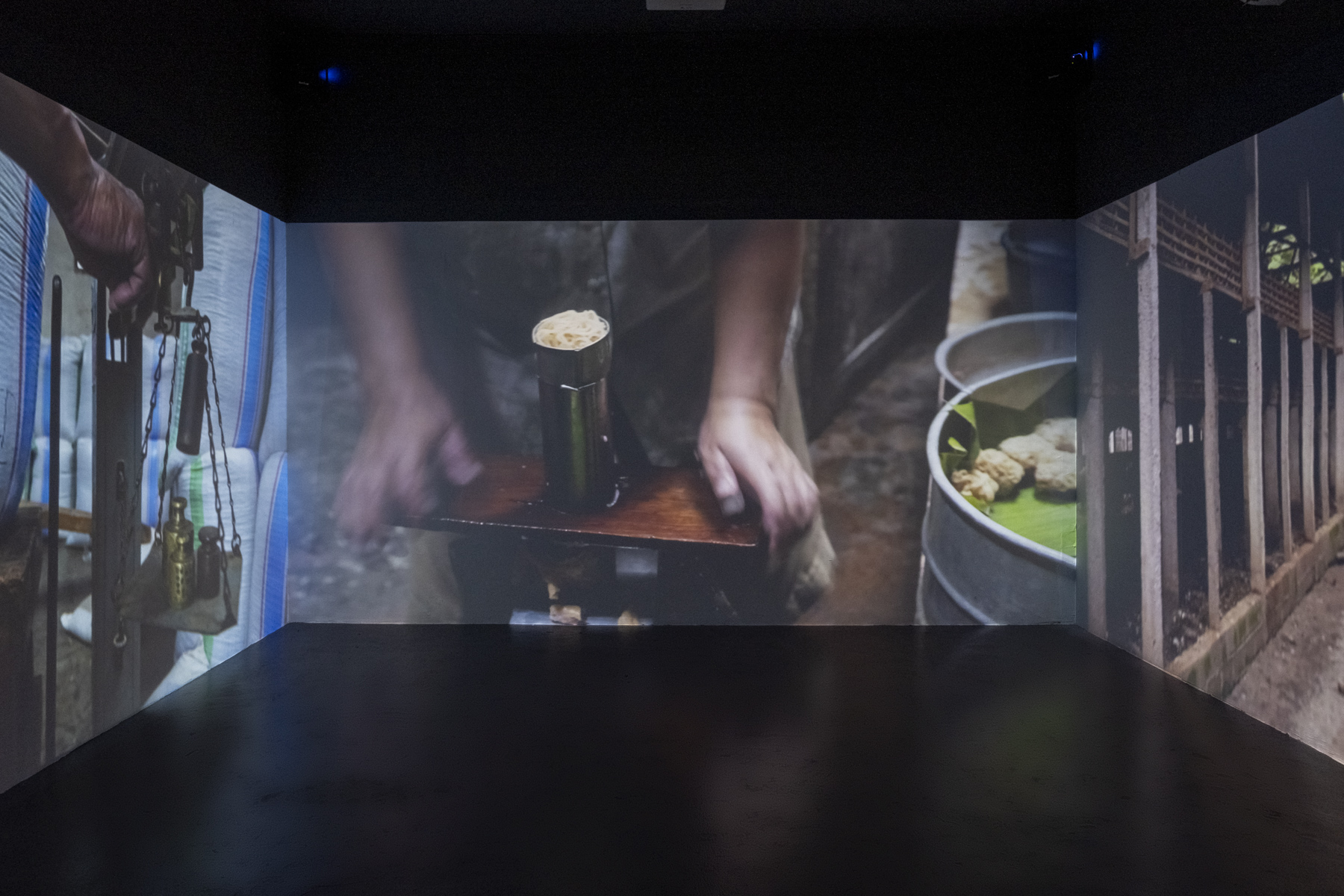 FX Harsono – The Last Survivors
Written: The term “Amalan” can be interpreted in many ways—spiritual, social, ecological. In your curatorial vision, is “Amalan” a prescriptive call to action for artists, or more of a diagnostic lens through which to observe what is already happening in contemporary practice?
HWB: Not spiritual at all. It is more social and, as you mentioned, particularly ecological. If we look at this year’s appointed artist, Anusapati, for example, as well as many other works in the exhibition, we can see this clearly. Anusapati sees our environment, or our planet, as already devastated, with seemingly no hope left. It is already dark, without any light, much like the space below where he hangs the roots of dead trees.
Since the 1990s, Anusapati’s sensusecologicus has been very strong throughout his practice. Do his works, as well as those of the other artists in the exhibition, encourage people to take action? Hopefully, yes. But of course, that is not the only point, because the motives behind someone’s actions can come from anywhere and be driven by all kinds of things they think about. Art may contribute only a little, or perhaps almost nothing, or its impact may simply not be visible. What we want to say is that an artist’s artistic sensitivity, or aesthetic sensibility, is by no means devoid of ‘action’.
Beyond that, exhibiting works by artists who grapple with highly critical issues and inspire many people is also an ‘action’ in itself: an act of appreciation and, more importantly, a way of showing our support for their ideas.
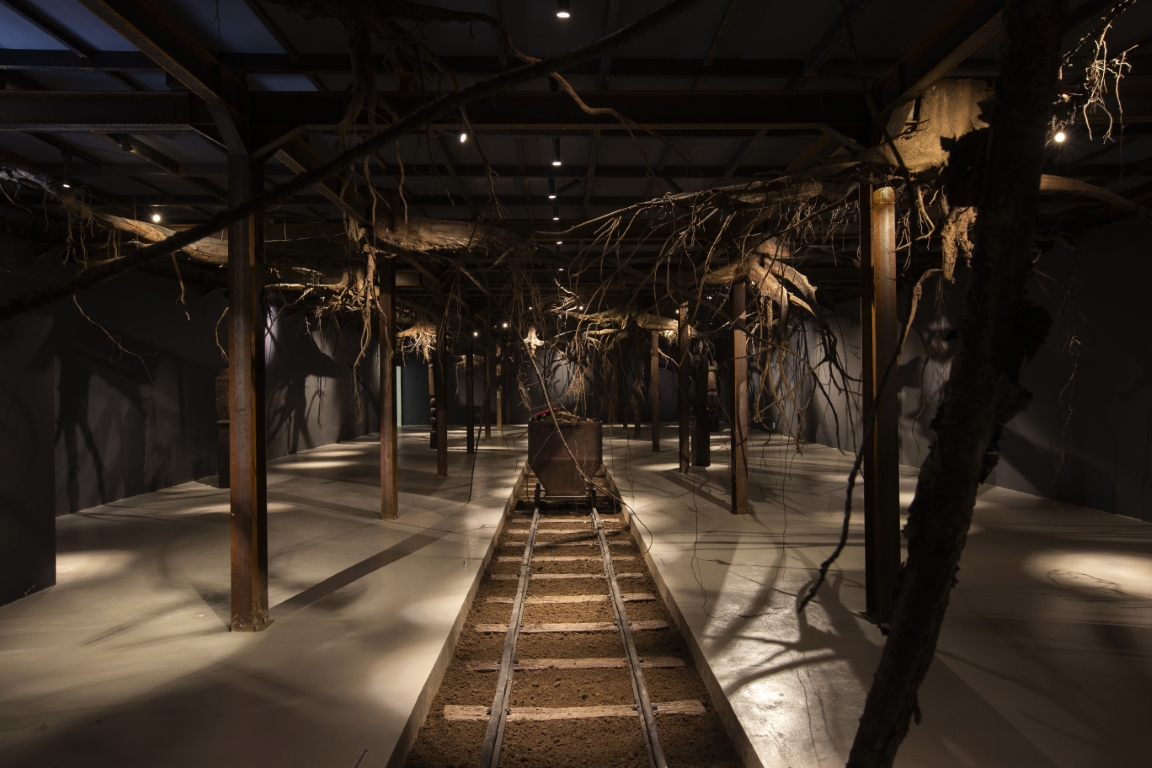 Anusapati – Secret of Eden
About the Audience as a Medium at ArtJog 2025
Written: With works by ruangrupa and the Murakabi Movement at ArtJog 2025, the audience is no longer a passive spectator but an active component, even a medium. From a theoretical perspective, how does this change the definition of a “work of art”? Does a work truly exist if the public does not engage with it as intended?
HWB: Yes, some people do see it that way. Art does not have a fixed definition, nor does it have a single set of boundaries. As for its relationship with the public, there are artists who will continue to make ‘artworks’ or perform even when no one is watching or cares about what they are doing. It can be like a hobby, for example. That kind of motif can be quite enjoyable, too.
The motif for becoming an artist is not necessarily to be known, famous, at the top, or incredibly wealthy, or to constantly be productive. Those are motifs that have gone too far, already being heavily driven by the buying and selling system, or the market, within our art scene. Why should enjoying an artwork necessarily mean having to buy or own it? Supporting artists can take many forms. It does not have to be transactional if you genuinely want to support them. Hahaha.
Ruangrupa and the Murakabi Movement are interesting because they always want to share different kinds of knowledge and sensibilities with us. More than ten years ago, ruru held an event titled “hanya memberi tak harap kembali” (giving without expecting anything in return). The idea was to give something to society without expecting to receive any kind of ‘return’ in exchange, much like a gift—once you have given it, you do not need to keep thinking about it anymore.
‘Pahala’ is one of the most clichéd terms in our society, much like the slick-looking photos of politicians or legislative candidates during election season… hahaha. The opposite of ‘amalan’ is actually ‘corruption’.
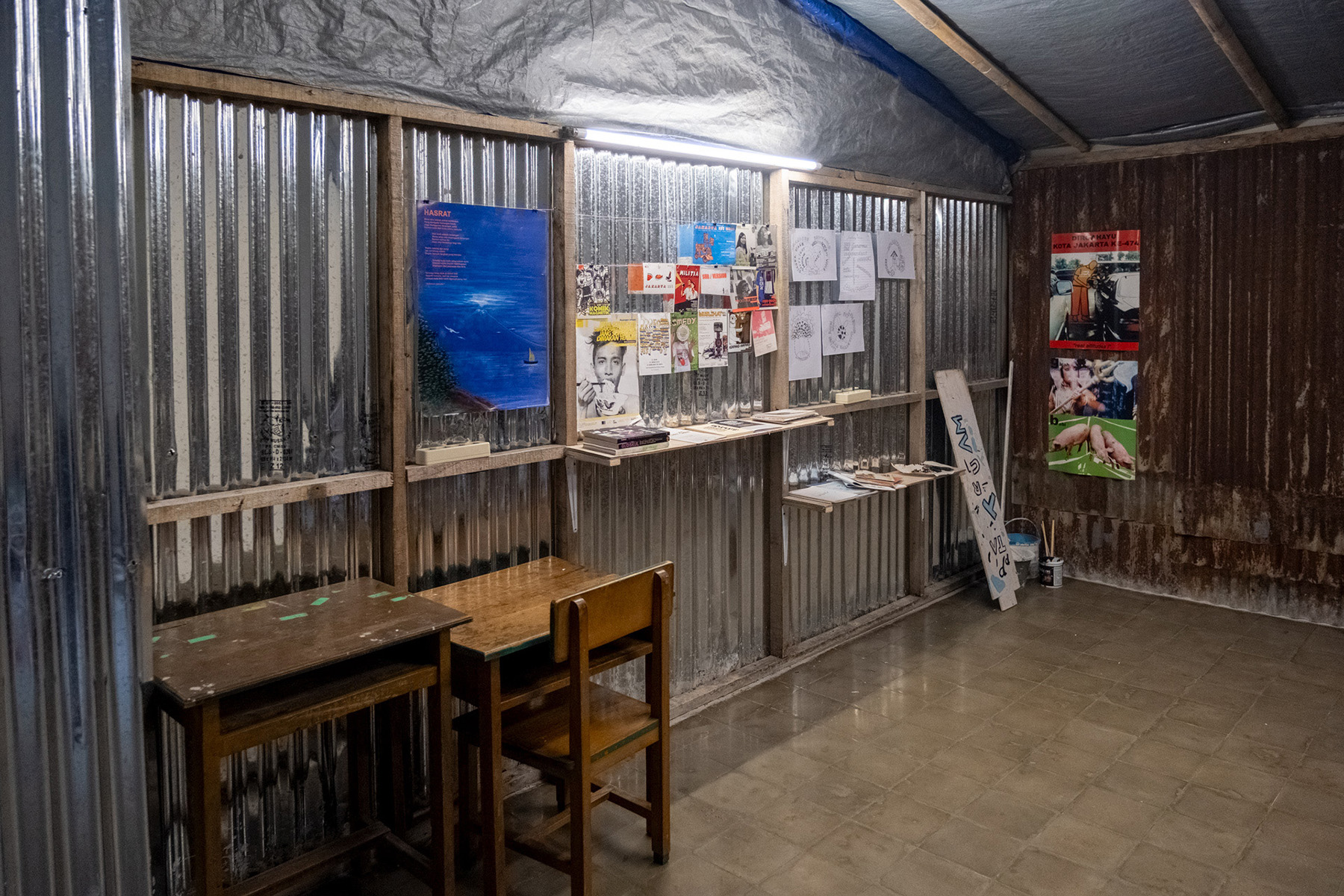 ruangrupa – Perguruan Tamanruru
Written: Practically, how do you design an environment that encourages genuine participation rather than awkwardness or hesitation? What visual, spatial, or textual cues do you use to give visitors to ArtJog 2025 “permission” to touch, contribute, and become part of the art?
BTW: Actually, participatory works, including those that can be touched and interacted with, have been part of ArtJog for several years now. But allowing audiences and visitors to experience, touch, and contribute to the work has also become part of its appeal.
In other words, over the years, visitor engagement at ArtJog has also shown that art cannot exist like an ivory tower, standing entirely on its own. These activities and activations also correlate with how visitors behave when they make short videos, take photos, selfies, and so on. So works like these are more fitting and, indeed, more welcomed by visitors.
About Heritage and the Future (“Afterlife”)
Written: “Amalan” implies an act that endures over time. Beyond the duration of the festival, what kind of “afterlife” is envisioned for the knowledge and experiences generated, particularly through participatory projects? Are there plans or hopes for these collaborations to continue?
HWB: Yes, I think that is the artists’ responsibility, not ArtJog’s. ArtJog’s amalan, as I see it, is simply to make the festival as good, as beautiful, as cool, and as affordable as possible. Its amalan has been going on for almost 20 years: putting on a festival every year, going through its ups and downs, but continuing to do it nonetheless.
The people behind ArtJog are remarkable because they are driven by the spirit of giving the best they can to their city. Those working behind the scenes sometimes sleep for only two or three hours a night for several days. In a way, the people who are not always visible are actually much cooler than those who always want to be front and center, the ones who love giving speeches… Everyone at ArtJog has that kind of spirit. They do not seek the spotlight and, honestly, would much rather not be asked to step into it.
BTW: Actually, art opens up awareness. It does not necessarily go on to directly solve problems or provide solutions. Rather, participatory experiences can build that awareness.
And that experience, I think, tends to nyantol more deeply as a form of awareness. Because being involved means that visitors contribute to the concepts proposed through the artworks. So perhaps, going forward, there could be more mixing. Collaboration would still be there.
But then the question becomes: what kind of collaboration? Would it simply be between artists and visitors, or perhaps between artists, visitors, and machines? Artists and visitors through AI? So conceptually, it is still collaboration. What needs to be developed, in my view, is what those different types or models of collaboration might look like.
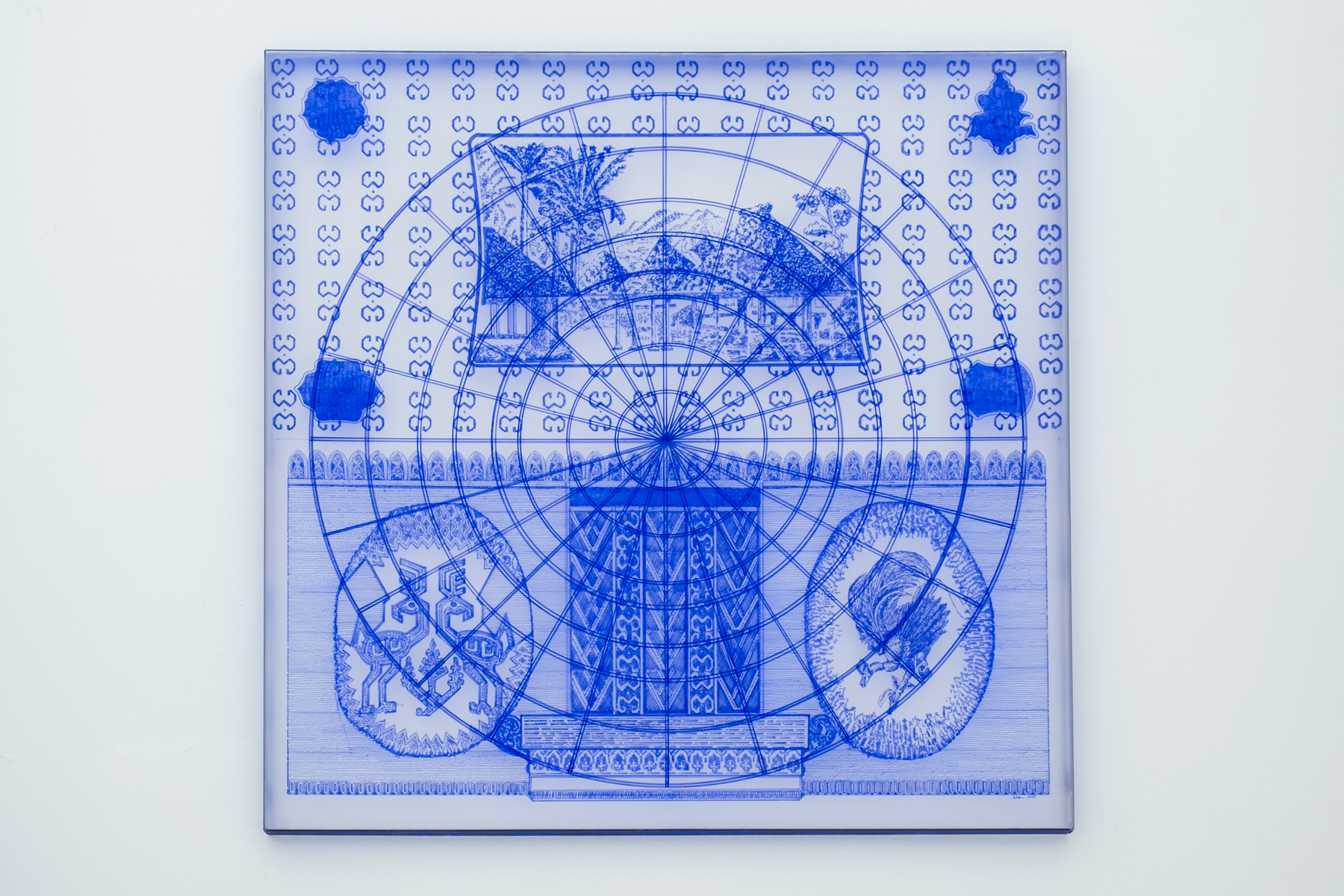 Aditya Novali – Tender Notes
Written: From your perspective, what role should ArtJog play in addressing some of the more challenging aspects of the art world, such as market speculation, the precarity of artists, or environmental waste?
HWB: ArtJog’s way of supporting artists and the art scene is by providing as much space as possible for works that are not simply made to look good or serve as decoration, but instead engage with issues or the artists’ particular concerns around certain themes.
BTW: Actually, the market is a different matter. At ArtJog, the stronger focus is on discourse or themes. From there, we can better see the precarity faced by artists, as well as their impact and roles in other areas, such as society and the environment.
And I think it is not only about the artists, but ArtJog itself as well. For example, ArtJog has started thinking about how to manage the waste and trash generated throughout the festival, both by visitors and by the committee itself. So it is not only about choosing a theme, but also about how ArtJog can actively play a role in addressing these issues.
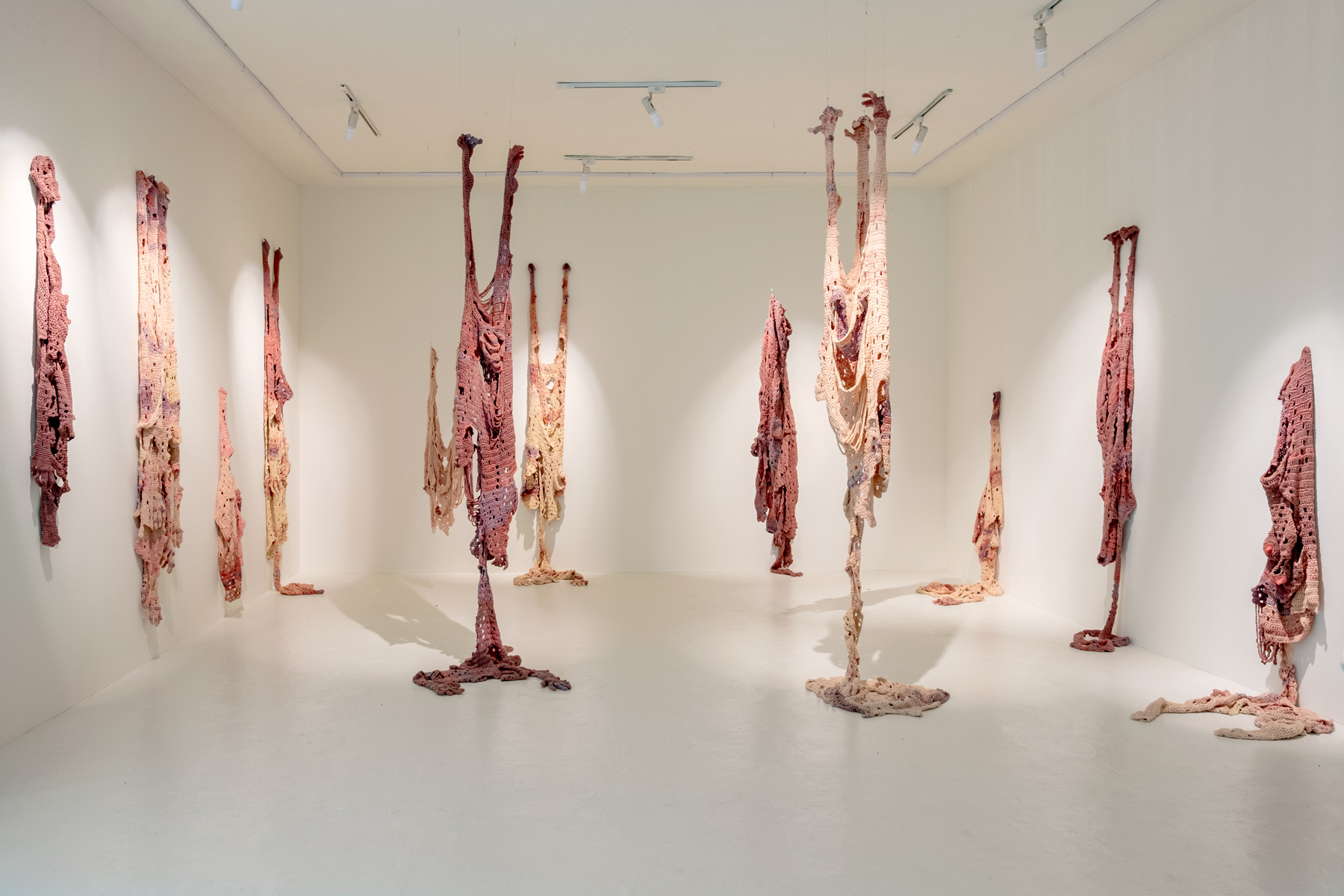 Faelerie – The Thirteen Offerings
Written: ArtJog 2025’s Open Call selected 16 artists from more than 600 applicants. Beyond providing them with a platform, what kind of guidance or support does ArtJog offer to ensure that this opportunity can translate into sustainable practices for these emerging artists?
BTW: The selection process for the Open Call artists is indeed very rigorous. As curators, Heri Pemad and I look at several things. First, of course, is how well the work aligns with the theme. Second is its sense of novelty. But when we talk about novelty, we also look at the artist’s potential. Sometimes young artists have great potential, but their work is not yet ready to be presented effectively at ArtJog. They may not have thought about things like lighting, for example.
But we have also seen progress. Some Open Call artists have started creating display plans and adapting their spaces to the ArtJog setting. For example, if their work is going to be hung, they have already thought about how the display will alter the walls and so on. The challenge is that sometimes they have too many ideas, but when it comes to execution, things do not quite work.
That is where the role of the curators and Heri Pemad comes in, to help optimize those ideas. Sometimes the work can be too crowded or too cerewet, with the artist wanting everything to be shown, when that is not necessarily the most effective approach. Perhaps it is because we have a better understanding of the flow and behavior of visitors at ArtJog, and what would be more effective to highlight rather than trying to highlight everything.
We also communicate the importance of focusing to the young artists who have made it through the selection. So the coaching is not only about the theme, but also about giving them insights into the possibilities they can develop. They do not necessarily have to develop all of them for this year’s ArtJog. The question is also what they can take forward from here.
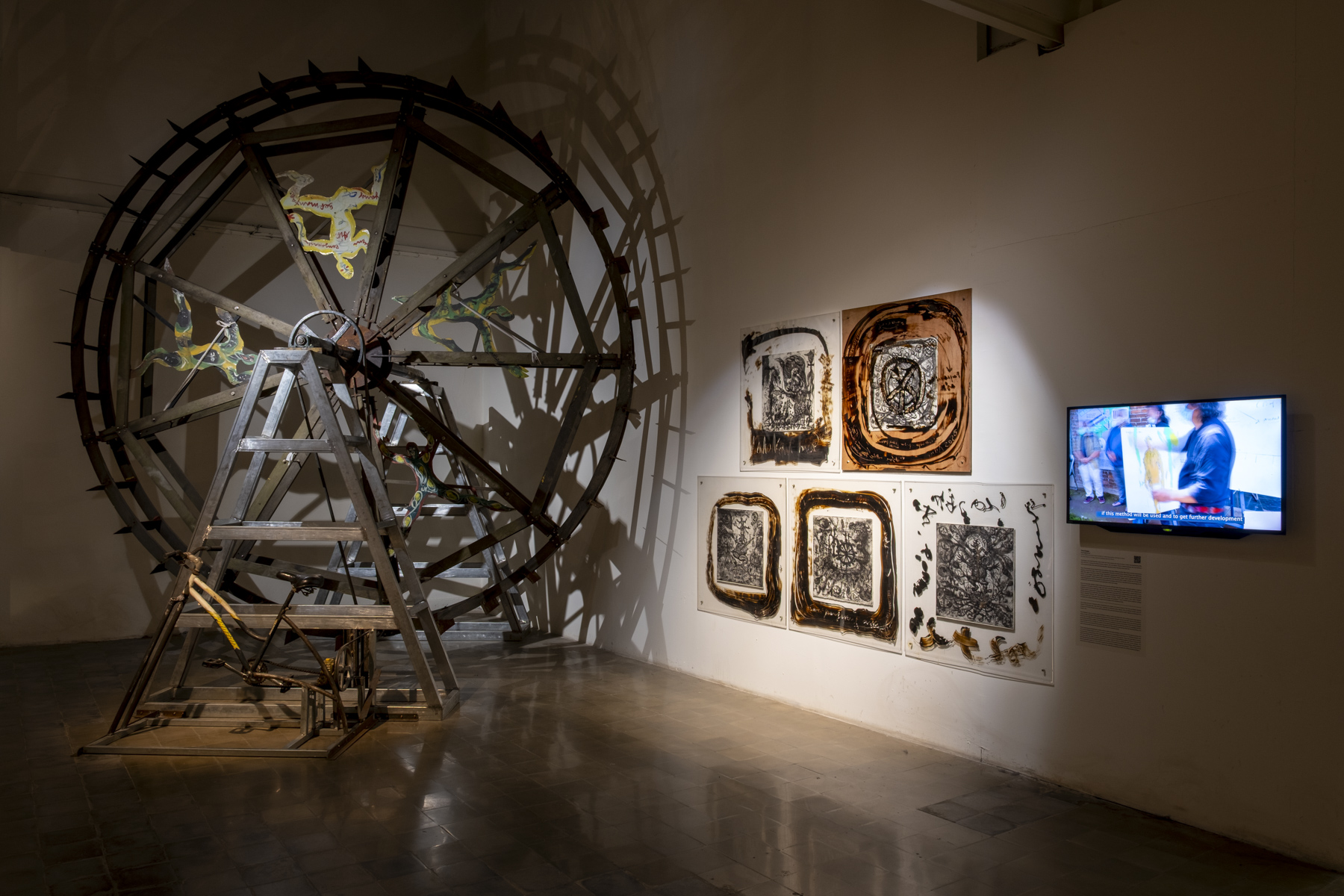 Tisna Sanjaya – Seni Penjernih Air
Written: After three years of exploring Lamaran, Ramalan, and now Amalan at ArtJog 2025, what is the most significant shift you have witnessed in Indonesia’s contemporary art ecosystem? And from your perspective, what is the most urgent conversation that needs to happen next?
HWB: Perhaps we need to change the ‘motif’ behind why artists make art, so that it is not simply about wanting to be famous, cool, at the top, or wealthy. It could start by asking again: why do you want to be an artist? And if it turns out there is no answer, that’s fine. But don’t just sit around doing nothing.
Written: After the intensity of bringing ArtJog 2025 to life, which work in the exhibition are you personally looking forward to revisiting, not as a curator, but simply as an art enthusiast?
HWB: There is always a desire to see how the works develop and to hear the ‘voices’ of young artists again. The works by the three young artists who received ArtJog awards this year, Falerie, S. Urubingwaru, and Veronica Liana, are really impressive.
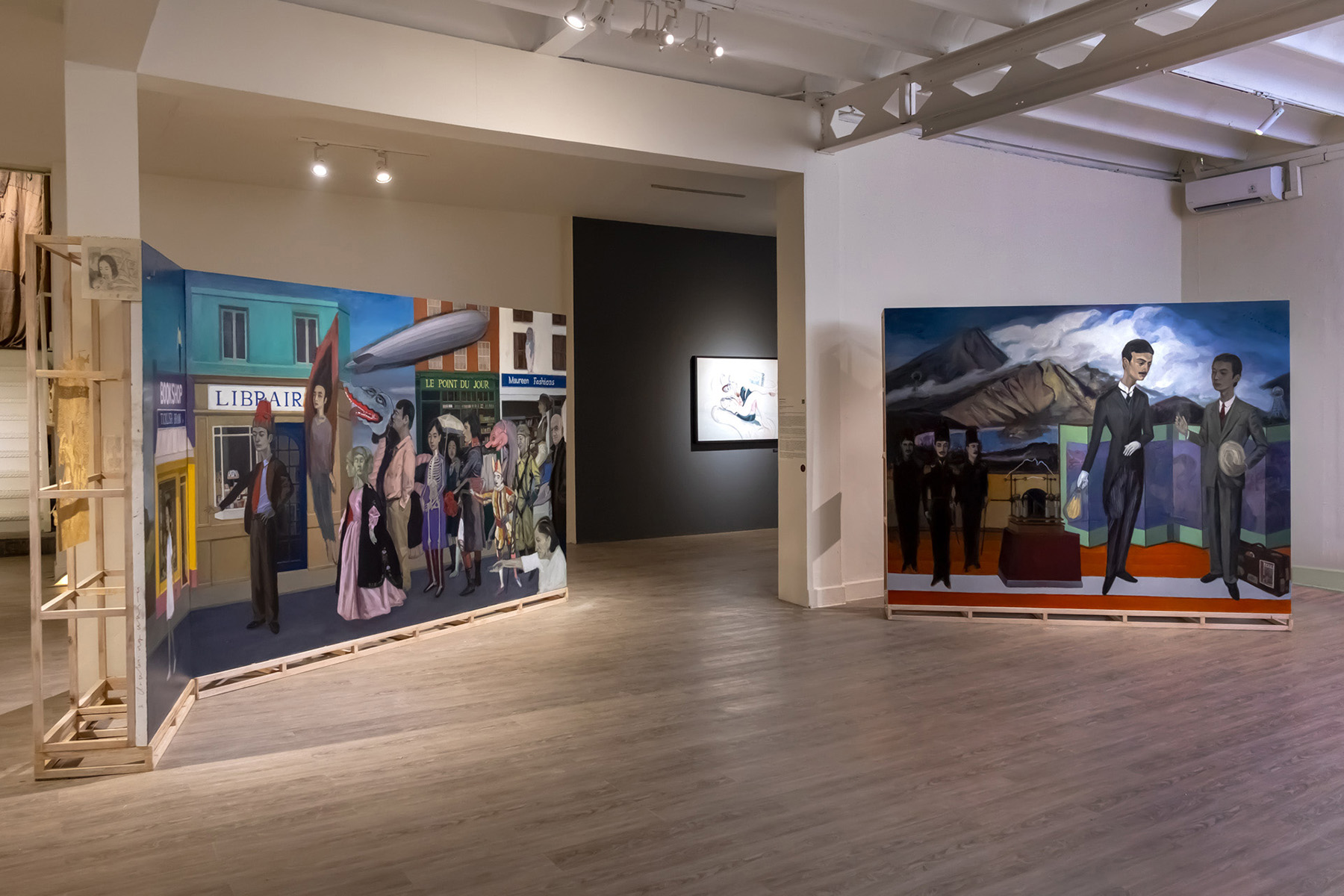 S. Urubingwaru – The World Farewell Parade, Nikola Tesla and The Lost Dialogues of the Equatorial Scientist
TW: Yes, there are several young artists whose potential really stands out. If I had to mention a name, for example, S. Urubingwaru. Drawing is already second nature to him. But there are so many things he wants to express. There are his sketches, and then there is his poetry. The challenge is figuring out how to bring all of these elements together into a cohesive whole.
There is also Zuraisa. From what I see, her current exploration is more technical, perhaps too technical, to the point where she comes across as a ceramicist, even though her basic practice is painting. She does not need to worry so much about the conventions of ceramicists. She could be freer, going deeper into that sense of “messing around” while still keeping it artistic. I think that is something they are still a little afraid to do.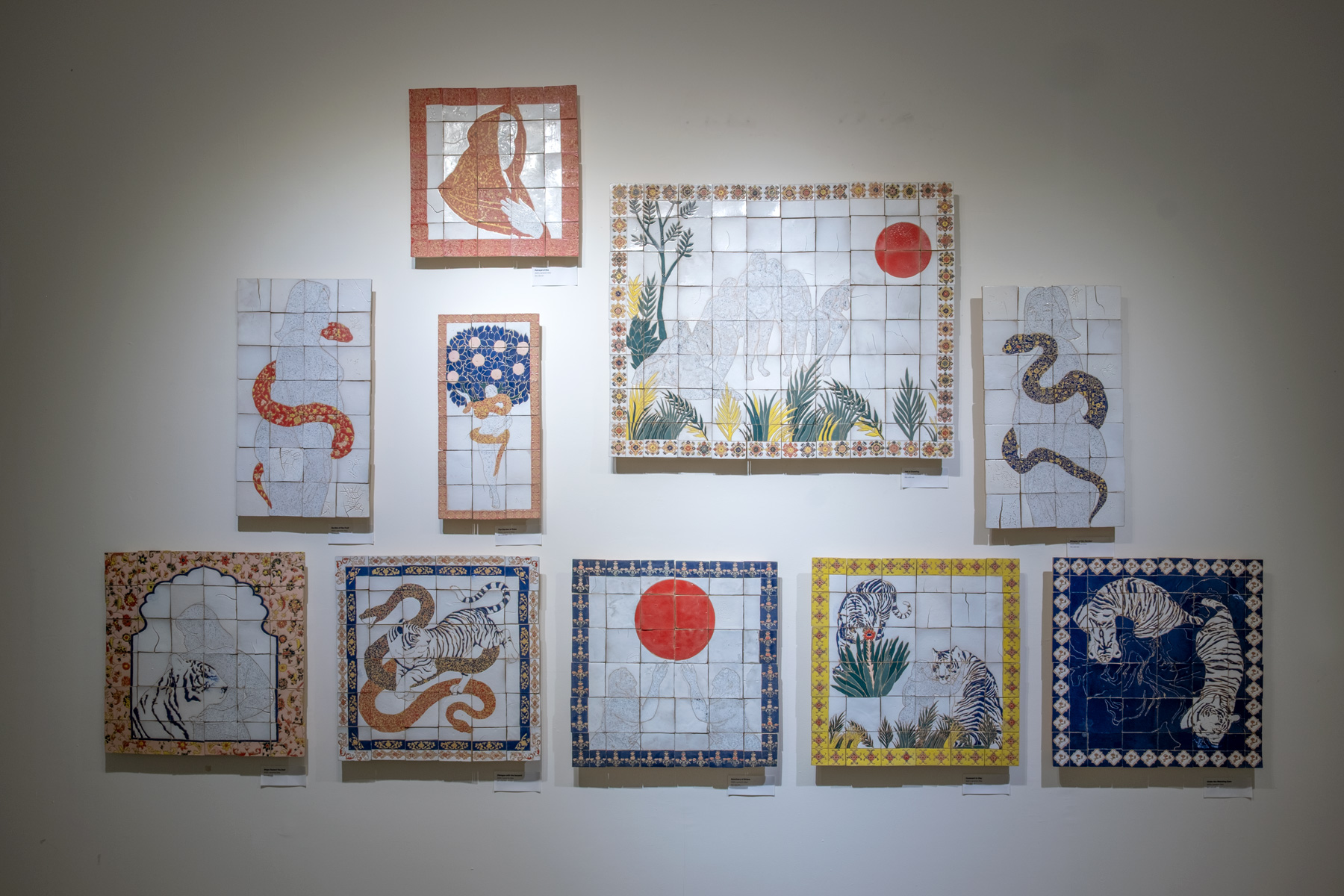 Zuraisa – Traces of Eve’s Good Deeds
Written: “Amalan” can be a powerful call for visitors to define their own practices. What is one piece of advice—one “good practice”—you would encourage them to hold on to as they build their careers in this complex world?
HWB: Devote yourself to something without expecting any ‘pahala’ in return. There is no such thing as a big or small amalan, good or bad. All amalan carry the same weight.
BTW: It is not really advice, but rather a concept of what it means to be an artist: being honest with yourself. Here is the thing. I currently mentor many of my students, and I see how much influence the market can have. But the market does not necessarily have a direct correlation with quality. There is some correlation, of course, but the market has its own formula.
Something of high quality does not necessarily sell. And something of lesser quality does not necessarily fail to sell. But when making art, quality should come first. Quality means having a mateng concept, mateng technique, and taking the exploration as far as possible, all the way through to the display. When visitors experience the work, it should spark their curiosity and make them want to learn more about it.
The market is not something to avoid. But once you nyemplung into the market, you need to understand exactly how the art market works. When a work is purchased, for example, you need to know your pool of collectors, understand the collector world, how they treat the work, and how artists should take responsibility for supply and demand. That is important.
Because whether you like it or not, the most basic economic principle is supply and demand, and artists need to understand it. Otherwise, a work may sell, but not for long. You need to know how to ngatur it. And how do you do that? By ngobrol and learning as much as you can from senior artists.
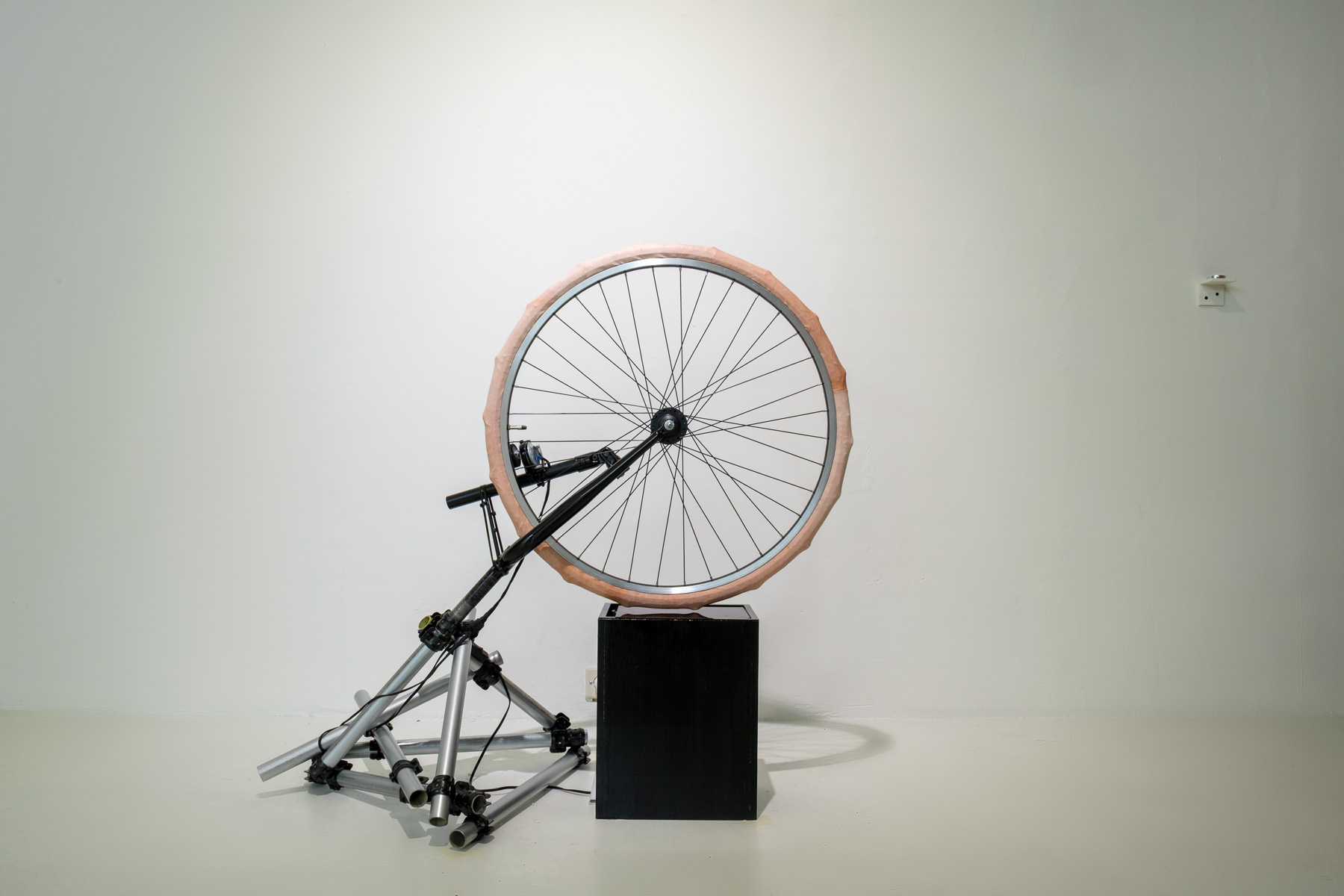 Masaru Tainaka – In a Slumber – Skin Tire