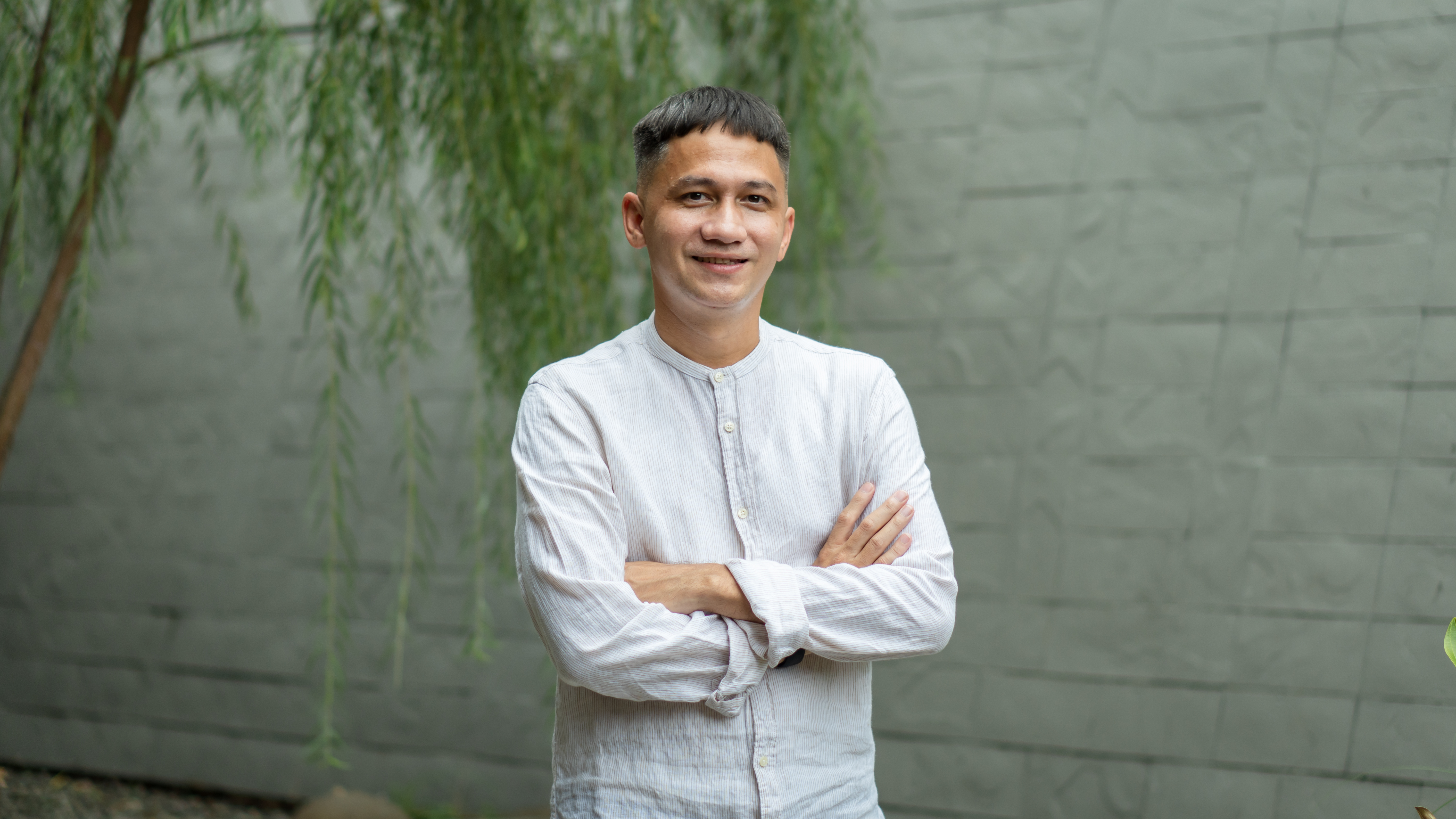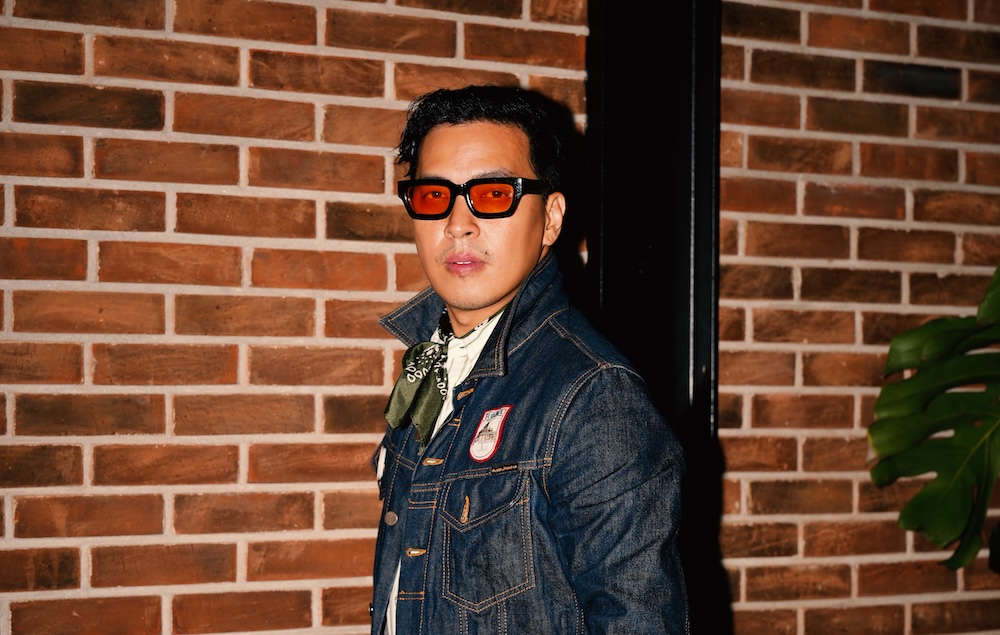
Navigating two decades in the music industry, Andezzz proves that it takes a conscious effort to let music remain "imperfect."
Twenty years is a long time to stay relevant in the music industry. For Edward Fernandez, better known as Andezzz, time has merely changed the medium, not the essence. Graduating from the prestigious Berklee College of Music with a degree in Jazz Composition, he ironically carved out his legacy in the electronic music realm.
Since capturing the public's attention with the duo SOVA in 2004, Andezzz has not only been a witness to the evolution of Jakarta's nightlife culture toward today's listening bar era, but he has also transformed into a premium soundscape curator for global luxury brands.
Now, in 2026, Andezzz is ready to redefine his boundaries through his fifth studio album, The Verve. Through a city pop-infused single titled 'Cerita Kita' (Our Story), Andezzz delivers a surprise by recording his own vocals. Speaking to Written, Andezzz dissects the art of maintaining the 'soul' in music, learning to embrace compromise, and navigating the industry without losing your identity.
Musical Journey & The Verve
Written: How did your academic background in Jazz Composition from Berklee influence your song structures in the electronic realm?
DJ Andezzz (A): To be honest, none of the things I learned back in college are actually used now. I took jazz composition back then because it was one of the easiest majors at the time. The assignments were just analyzing and making compositions using pencil and paper without any musical instruments. Even so, the educational system, like mentoring and ensemble classes, was indeed very helpful. In today's era, songwriting is much simpler and not as complicated as old-school jazz music, because essentially, musical composition has existing formulas and chord patterns.
Written: What is your creative process like in the studio? Do you find the beat first, or the lyrics?
A: Every musician has their own way. Some start with the lyrics, some the melody, and some start with the chords. For me, I will always start with the beat. Deciding what kind of song to make first—whether it's nu-disco, house music, or pop. Once I have the drum assets, I move on to creating the chord progression, figuring out if the song should be sad or happy. Only then do I look for the rhythm, the groove, add the bass, the melody, and finally, the lyrics.
Written: What is the most fundamental difference between the music you created at the beginning of your career 20 years ago and what you produce now?
A: The metaphor might be similar to creating a food menu. So, in the end, it really is about entertaining ourselves and entertaining others. Along the way, I have collaborated a lot with other people who also have their own stories. Ultimately, every collaboration has its own journey.
Perhaps in the past, I was more idealistic, not really caring about the state of the country or the music scene at the time, or there were even works heavily influenced by the situations happening back then. For example, in the 2000s, there was no such thing as Electronic Dance Music (EDM) yet; it was mostly progressive house. And by 2010, it was already the EDM era, along with music that was actually soulful or R&B, but still retained that EDM vibe.
So, every journey has its own story. But one thing is for sure: I will never stop making music.
Written: Why choose 'Cerita Kita' as the opening single for your 5th album, The Verve, and why did you finally decide to sing it yourself for the first time?
A: The story is actually quite funny. Usually, when I work on a track, I always do it alone using the recording equipment I have at home. Well, middle of last year, just as I was about to start, my computer crashed. It wouldn't turn on, and I had no idea what caused it.
Meanwhile, all the ideas were already in my head, so they had to be channeled out. I then called a friend, Jonathan Mono, to borrow his studio for recording. During the album recording process, he indirectly became incredibly supportive by giving input, keeping me company, all the way down to the song selection. The theme of the song is a happy goodbye.
As for the singing part, it was also Mono's suggestion to make a new breakthrough. Usually, I only sing as a guide vocal for the actual singer later on. I even told him that my voice isn't a diva's voice. However, we agreed that what listeners widely accept nowadays is no longer just diva-like vocal quality, but rather the delivery of a message that they can genuinely relate to.
Written: The creation of this song also involved Toma from Mocca. What's the story behind that?
A: This started from an old hard drive. Inside, there was a song demo from around 2017 that I originally made together with Toma, but it was only about 32 bars long. I dug through the hard drive again, found the song, polished it up, and finally called Toma to ask for his permission since his handiwork was in it too.
The Analogy of Soul in the AI Era
Written: Generative AI is now capable of creating precise music in a short amount of time. As a musician who prioritizes soul, how do you ensure that your work doesn't sound rigid like something made by an algorithm?
A: ust create it as it is, just be honest. In theory, maybe AI-generated songs and human-made ones are hard to tell apart. But in my opinion, there are two human senses that cannot be fooled: the sense of taste (the tongue) and the sense of hearing. If we hear a pleasing note, we can't lie about it. In the end, artwork cannot be 100% replaced by machines because music can only be judged by its 'feel'—whether it sounds good or not.
Written: In an all-perfect and quantized digital era, how important is it to maintain 'imperfection' or human error in recordings?
A: It's still important. In the song Cerita Kita, there is one note in the chorus that was actually intentionally made slightly out of tune or fals (pitchy). The goal is for the blend to make the frequency complete. If everything is made 100% pitch-perfect, the result will sound like a robot. But only people with trained ears can hear this.
Jakarta's Sonic Pulse and Music Trends
Writtek: Jakarta's culture has shifted from clubbing to listening bars and coffee culture, and even the phenomenon of the 'coffee rave' has emerged. Has your music evolved to follow the rhythm of this city?
A: Nope. When creating a piece of work, it usually has nothing to do with the venues or events where I perform. As a big city, Jakarta has a ton of influences. What exactly is clubbing, what kind of songs do you listen to when chilling in a lounge, there are also those who are now health-conscious and no longer go clubbing, and so on. So, when I create, I just make music, what makes me happy.
Regarding the coffee rave phenomenon, in my view—well, in my belief, it is merely temporary, just a momentum. Nightlife will always carry on and Jakarta will continue to be a role model for the entertainment world.
Written: Song durations seem to be getting shorter. Back then there were still 5-minute songs, now there are even some that are less than 3 minutes. What is your response to that?
A: Yeah, I also don't understand why (laughing). This might be because of the digital and 'swipe' era, where the human brain only needs 3 to 5 seconds to digest something. I don't have a definitive answer for the reason, but the point is we have to adapt.
Back in the day, a song's intro was quite long—maybe there was a guitar first, then drums, whatever else, and only then the singing. Now, I try to adapt to a faster version: a short intro, then jumping straight into the vocals.
Written: Finally, surviving for more than 20 years is an extraordinary achievement. Beyond releasing albums, you are also a Music Director working with global brands. What is the key when dealing with business: idealism or flexibility?
A: It's very simple: when we work for a brand or another company, there is no idealism whatsoever. We have to compromise, adapt, and facilitate what they need using our experience and expertise. And this is not difficult at all. If you want to be idealistic, then just make your own songs. But when working with a client, we have to be professional and adjust to their identity and music policy.