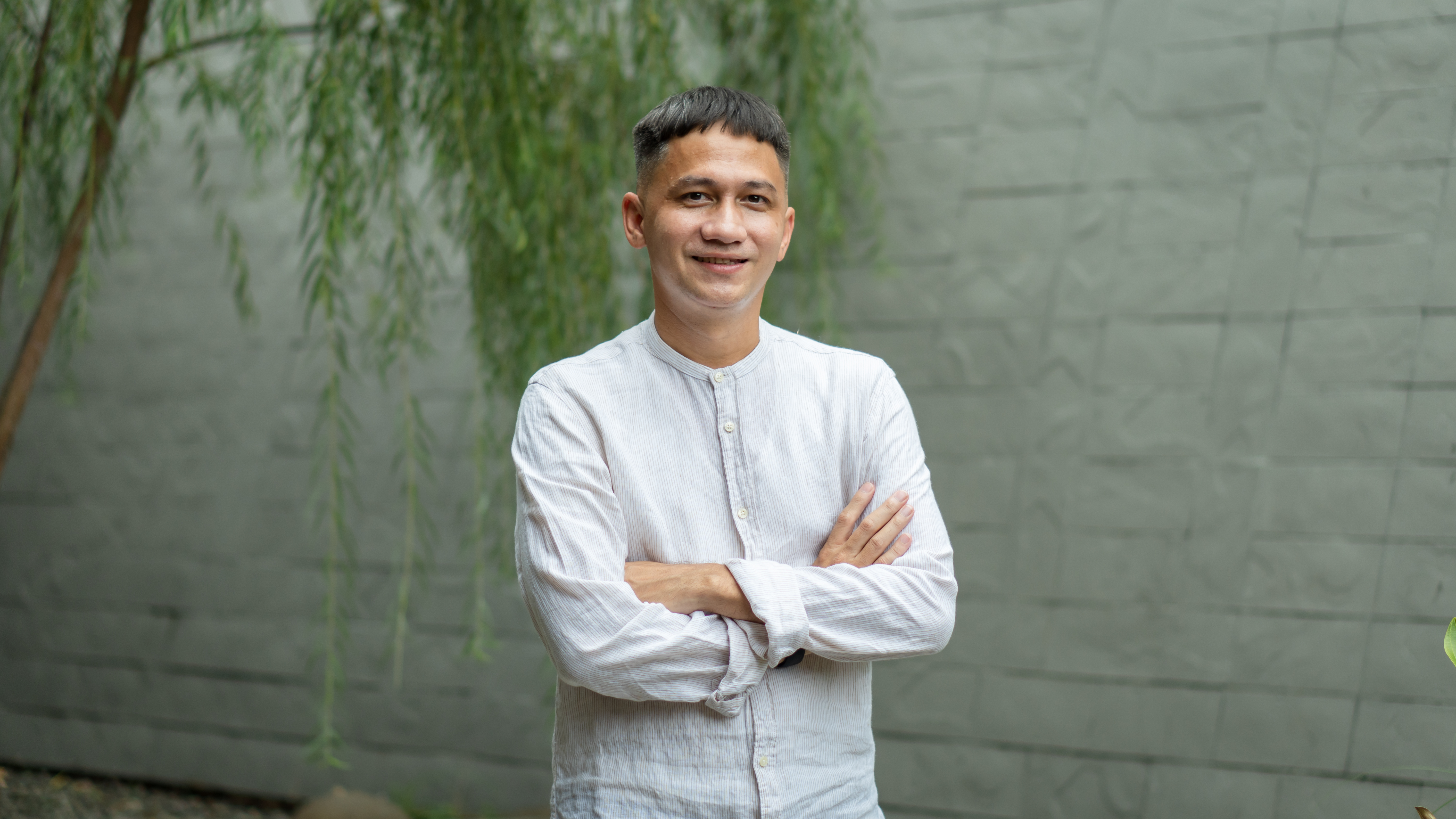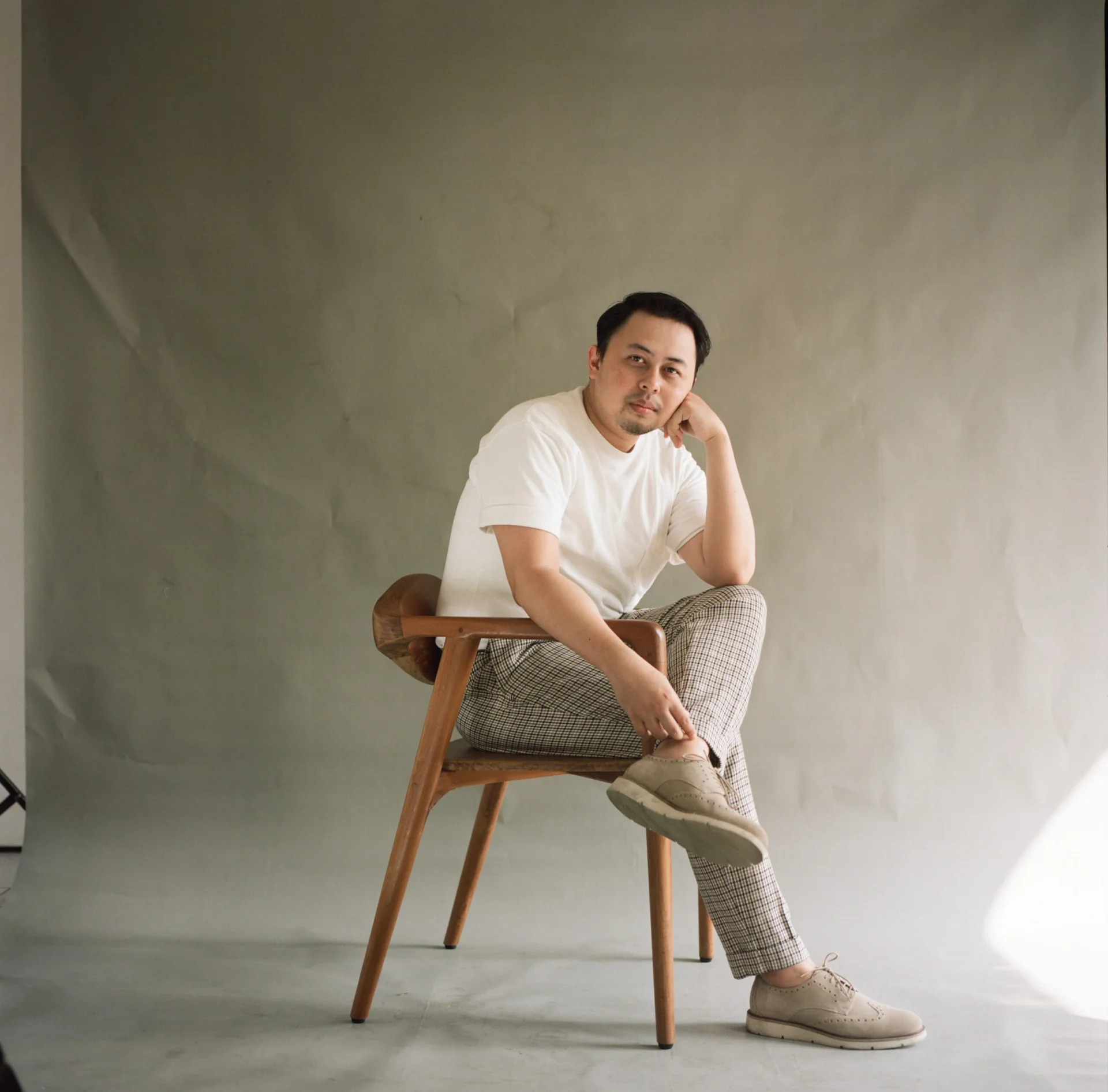
Getting to know Eugenio Hendro, the Indonesian product designer bringing local furniture design to the global stage through emotion, vision, and MSME design collaborations.
For Eugenio Hendro, designing is not merely about creating functional objects; rather, it is a medium to translate human emotion and national identity. This Product Design graduate from the Bandung Institute of Technology (ITB) began his professional career in 2008 with a unique story—he applied to a company he assumed was based in Dubai, only to find the job took him to the Box Living factory in Cileungsi, Bogor.
Accustomed to handling the grueling demands of mass production, his eyes were opened wide when he was sent to international exhibitions, from Singapore to IMM Cologne. This invaluable experience made him realize that the work of Asian designers requires an authentic identity and core value to be recognized on equal footing on the global design stage.
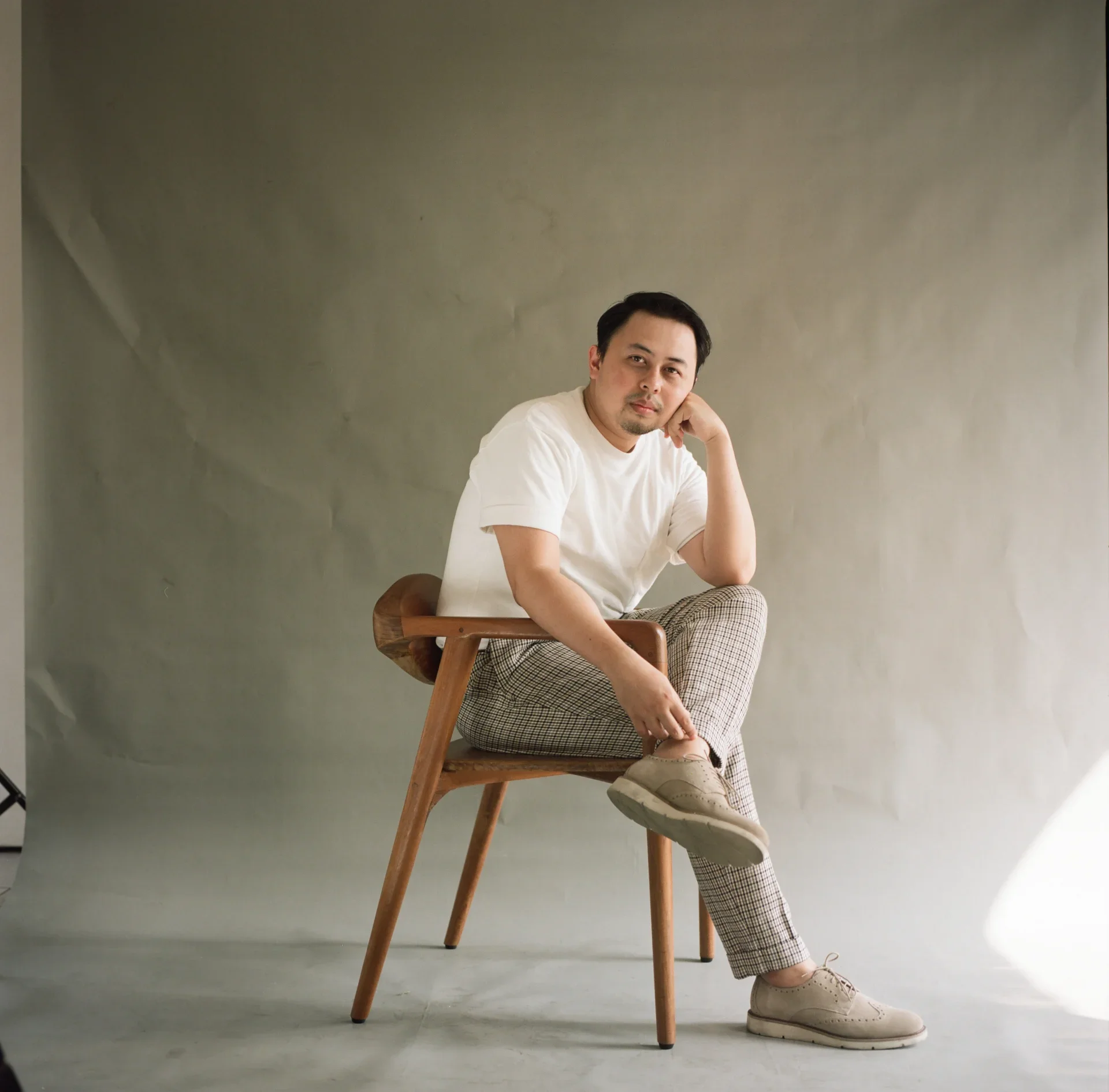 Photo: Courtesy of Eugenio Hendro
The career of this Indonesian product designer has continued to evolve through various maturing phases of self-discovery. Eugenio is now recognized as one of the big names behind a prestigious lineup of local furniture and spatial designs. He serves as the creative director for commercial brand collections such as Bika, Vivere, Arbor & Troy, and Iwan Tirta.
Interestingly, even with his feet firmly planted in the commercial industry, Eugenio's heart has never strayed from design collaborations with local artisans and MSMEs. Alongside craftspeople across various regions, he proves that design is a powerful empowerment tool capable of driving the economic pulse of a community.
Read on for a snippet of Written’s conversation with Eugenio Hendro.
Seeking Indonesian Roots and Sentimental Touches
Written: In Eugenio Hendro's works, the "Indonesian" identity is always the primary breath. How do you define Indonesia?
Eugenio Hendro (EH): Indonesia is like an endless resource and source of inspiration because of its highly multifaceted nature. I used to think 'Indonesianness' was purely about its physical form, but all those assumptions were slowly shattered.
For me now, Indonesia is about its human emotion, its intention, and the wisdom of its past. Stemming from this admiration, we (Eugenio Hendro Design Studio) strive to design while continuously learning about Indonesia. I find an abundance of inspiring things—seemingly limitless—when studying this nation's identity. Therefore, perhaps the quote that best describes my current design approach is we design for the future by learning from the past.
Written: Does that mean design inspiration can come from very simple, everyday things?
EH: Exactly. My search for 'Indonesianness' is unearthed from daily life, not just from incredibly heavy philosophies. My inspiration can be born from looking at telur asin (salted egg), tikar (woven mats), or even a bowl of soto ayam (traditional chicken soup), which is then translated into a product. I've learned over time that the easier it is to explain something to the market, the easier the product will be understood and embraced by the public as its users. My job is to be a messenger through the medium of form.
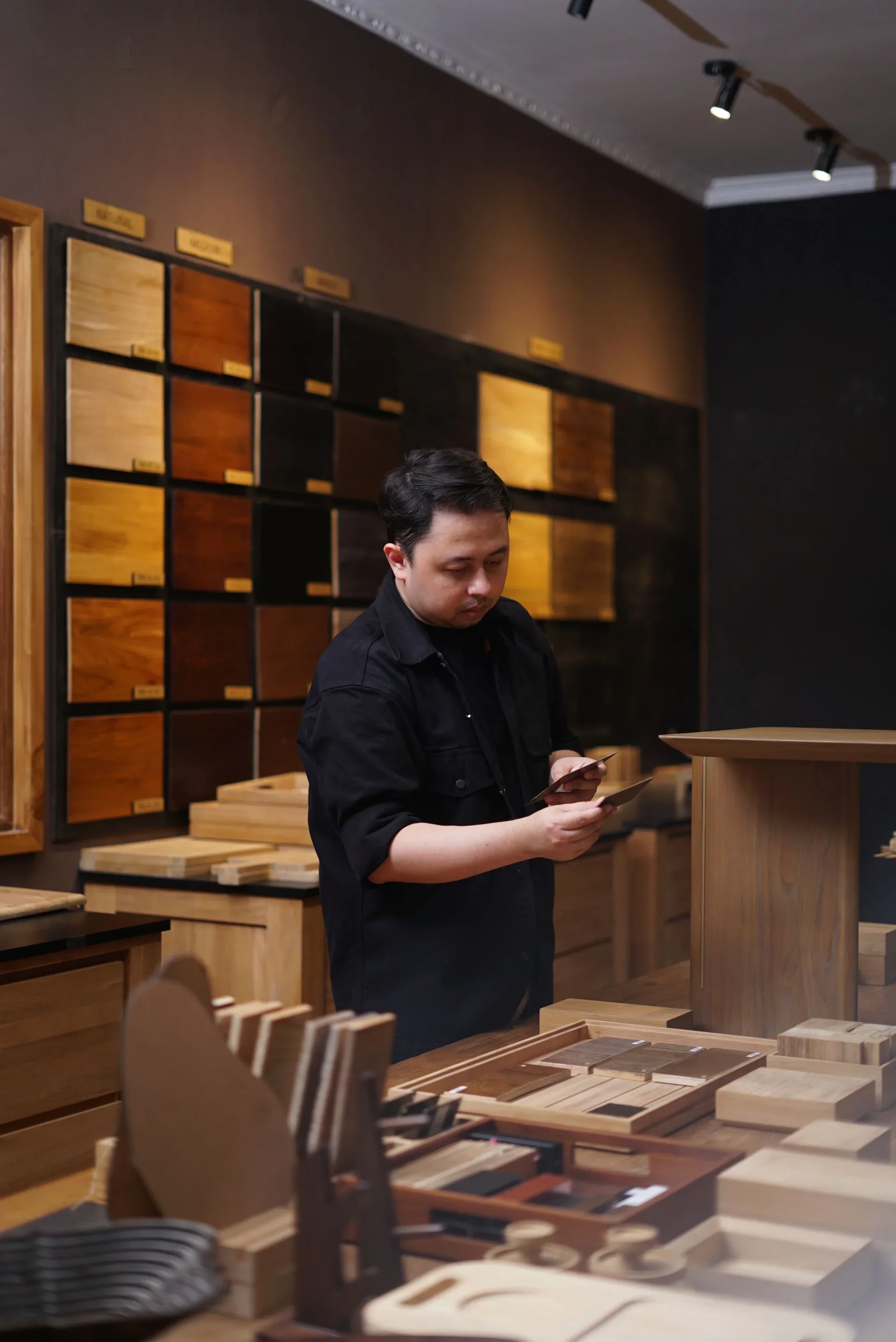 Photo: Courtesy of Eugenio Hendro.
Written: What is the creative process of an Eugenio when executing these ideas into a finished piece?
EH: Much of my design process is executed in the subconscious, especially when searching for inspiration. It mostly happens while traveling, when I am simply enjoying my surroundings. Or it could happen in the car, on a train, or even while sleeping. Because in those moments, I am truly present for myself without distractions.
In fact, if I seek stimuli from the internet, it feels "dull" because it hasn't been processed personally first. Even when inspiration strikes, I deliberately let it "sleep" first, and by the time I wake up, I can immediately sketch it out.
Written: You once mentioned wanting to be the "Alexander McQueen" of product design. What makes him so special?
EH: McQueen's design lines are poetic and raw, but also bold and assertive. In the product design industry, people usually only talk about function, efficiency, and rigid numbers. In my opinion, those standardized elements actually make product design feel cold, when in reality, we also need that sentimental touch that plays with feelings and dreams.
We design for the future by learning from the past.
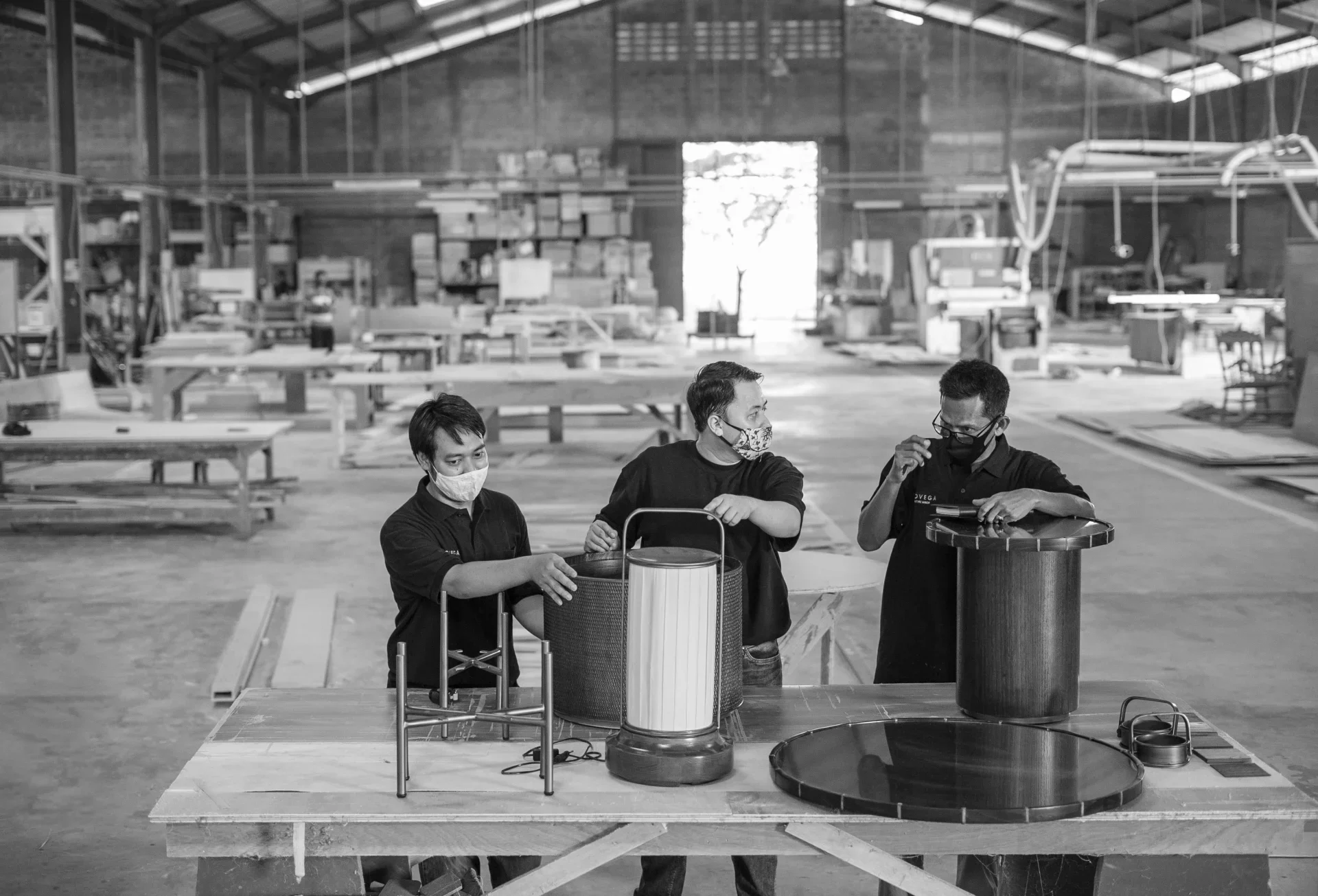 Photo: Courtesy of Eugenio Hendro.
Multidimensional Collaborations: From Luxury Brands to Local Artisans
Written: How do you balance idealism with the spirit of commercial brands like Bika, Vivere, and Arbor & Troy?
EH: Every collaboration certainly has a different vision. Take Bika, for example; they want luxurious items that cannot be found anywhere else, which can compete with European products despite being locally made. This brief then becomes the direction in which I must move.
For instance, packaging 'Indonesianness' with international visuals, or unearthing vintage products into something much more contemporary. From these directions emerged a modern dining chair inspired by a Solo tusuk konde (traditional hairpin), or bamboo steger (scaffolding) transformed into a multicolored table.
Or for another brand, local flair can comfortably sit alongside modern aesthetics. Anything is possible as long as we can truly understand the DNA of each brand, their target market, and their preferences.
Written: On the other hand, Eugenio is also known to be very active in collaborating with MSMEs and regional artisans. Does the approach feel in stark contrast?
EH: Working with MSMEs is something I deeply love, even though the worlds are quite different. It is precisely from those differences that I learn about life and humanity. While with big brands I am allowed to express myself freely, with MSMEs I have to ensure that my designs can practically be used and executed by them.
Because every design decision will affect their livelihood. Making a beautiful woven product is not difficult, but creating a woven product that can sustain an entire village and inspire the local younger generation—that is what must be done. Here, I genuinely feel that design can be useful for everyday life in Indonesia.
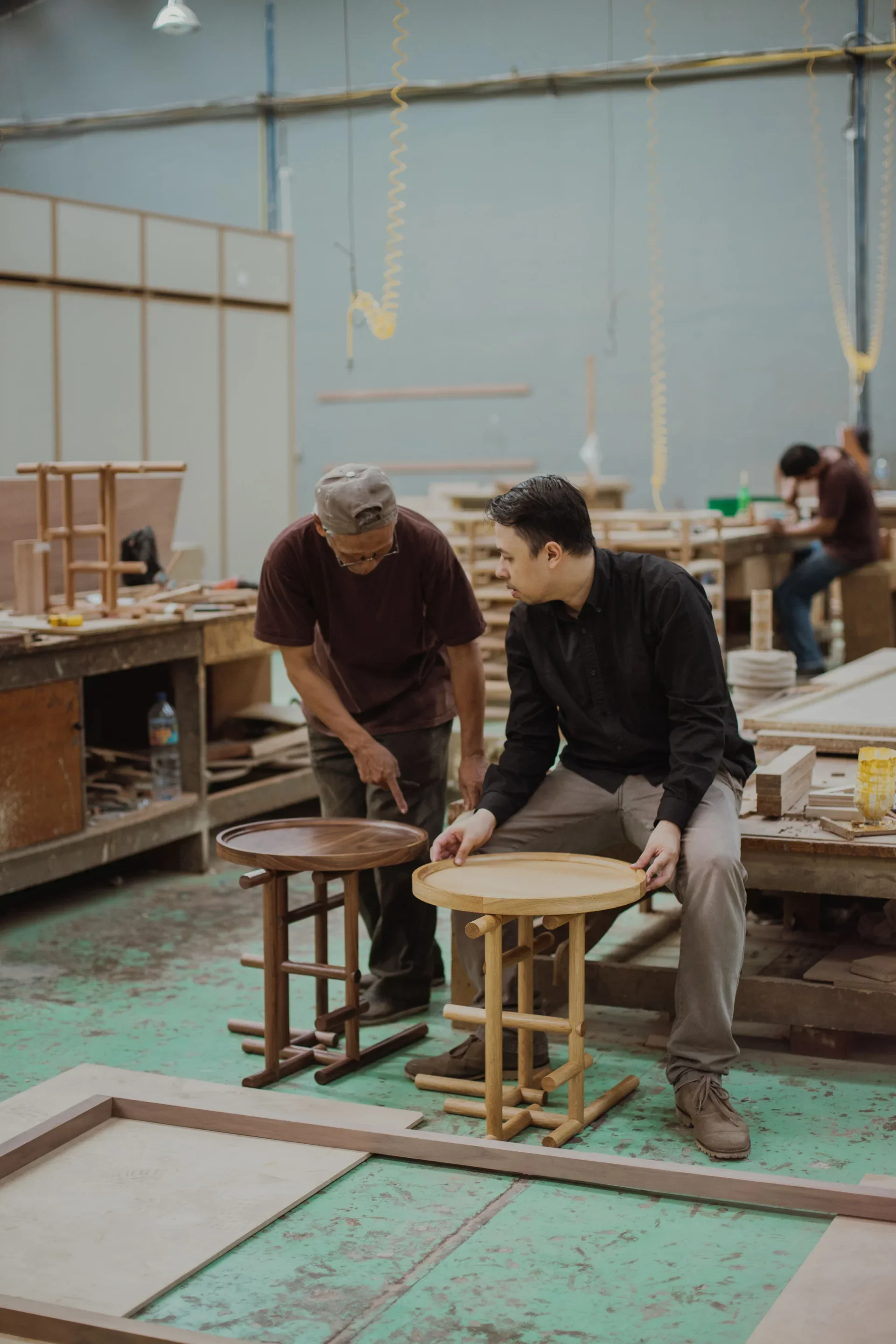 Photo: Courtesy of Eugenio Hendro.
Written: Were there any particularly touching moments while working side-by-side with artisans in the regions?
EH: Yes, when I was helping the gedog weavers in Tuban. I exchanged knowledge with them to turn the imperfections of their threads and natural dyes into a strength for their products. After trying repeatedly for six months, the resulting fabric was finally excellent. At that point, I suggested they patent the name.
After the concept was explained by the Ministry of Trade, the local weaver woman actually refused, saying, "If I patent it, my friends won't be able to eat." I felt completely floored hearing that. Something we consider perfectly normal—as a tool for self-protection and intellectual property in the industry—turns out to be something they don't need at all. I had forgotten that this is craft; something born with them, on their land, and intrinsically tied to their way of life.
Professional Regeneration and the Challenges of the AI Era
Written: Why is the issue of regenerating the product designer profession so urgent?
EH: Our industry needs an influx of fresh blood so the chain doesn't break halfway. Often, product design graduates are confused about where to step next and ultimately end up leaving the profession altogether.
There are indeed many factors, but I felt I had to survive to prove to the generation below me that you can actually make a living from this profession. It's a profession that perhaps loses out in hype when compared to interior designers or architects. So I realized that besides flying the flag for 'Indonesianness', I also have another responsibility: ensuring the regeneration of Indonesian product designers.
Written: Was this also the background behind the birth of Millimeter Manifesto?
EH: That's right. The role of a product designer is often invisible in the industry; even architects or interior designers frequently design furniture themselves. Millimeter Manifesto was formed as a collective hub for product designers or design studios that might have different visions but share the exact same goal: developing Indonesia's design ecosystem. We are striving to implement clear workflows and business ethics, turning it into an educational space for the regeneration of Indonesian product designers.
Written: Within Eugenio Hendro Design Studio itself, how do you educate and mentor young designers so they are ready to dive into the industry?
EH: I am actually still searching for the perfect system for this. Receiving a brief at the start is a given, but what must continuously be honed is sensitivity, the ability to process feelings, and an understanding of market characters.
Most of the young designers I meet rely heavily on research via AI, seemingly forgetting that they are humans who can process emotion by feeling, seeing, touching, thinking, and—what is most often forgotten—asking. So, I frequently push them to get out of the studio: visit showrooms, attend design events, join cultural activities, and go to exhibitions or other social agendas. Is this the absolute best way? I still don't know, but since that method worked for me, I try to duplicate it.
Written: The development of Artificial Intelligence (AI) is currently unstoppable. How do you view this phenomenon among young designers?
EH: AI indeed significantly cuts down the time needed for data collection, but I am far more concerned about the human quality aspect. A member of my team once, right after a meeting with a client, typed into an AI and asked, "Please, what does the client mean by this?" Instead of digesting the conversation themselves, they put their trust entirely in AI, and in my opinion, that kills instinct and feeling.
I also use AI for some things, mainly to cut down work time. However, if I hand it over to AI to answer the questions I have, I find myself getting addicted afterward, especially when pressed for time. And that is incredibly dangerous—when we have surrendered our own ability to think to AI.
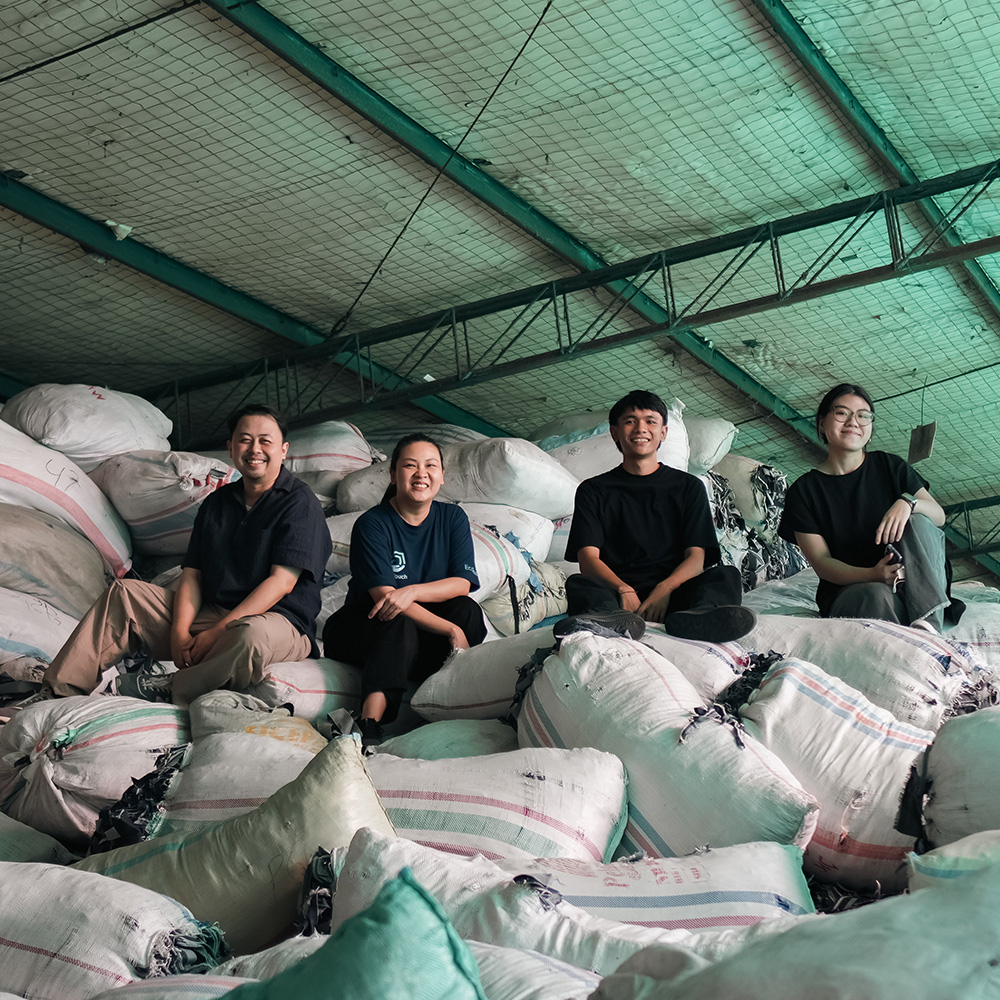 With Eugenio Hendro Design Studio team. Photo: Courtesy of Eugenio Hendro.
Written: What is the impact on creativity if this dependency is left unchecked?
EH: People will become increasingly lazy about thinking critically and too afraid to take the risk of trying new experiments. If creativity is exclusively driven by the exact same algorithms, our lives will constantly be steered. Ultimately, in the creative industry, all products will just become uniform templates without any genuinely new value. Industry players will eventually become uncreative because they are no longer feeling, but merely imitating feelings.
Written: Then, what is a designer's main weapon to fight against this current of instant technology?
EH: AI's glaring weakness is that it cannot make accidental mistakes. Conversely, products that are made too straight, rigid, and perfect actually diminish the role of feeling that makes humans special compared to technology. The human body and senses need to feel textures, the imperfections of form, and things made by human hands. This touch of human feeling is exactly what will become a true luxury commodity in the future.