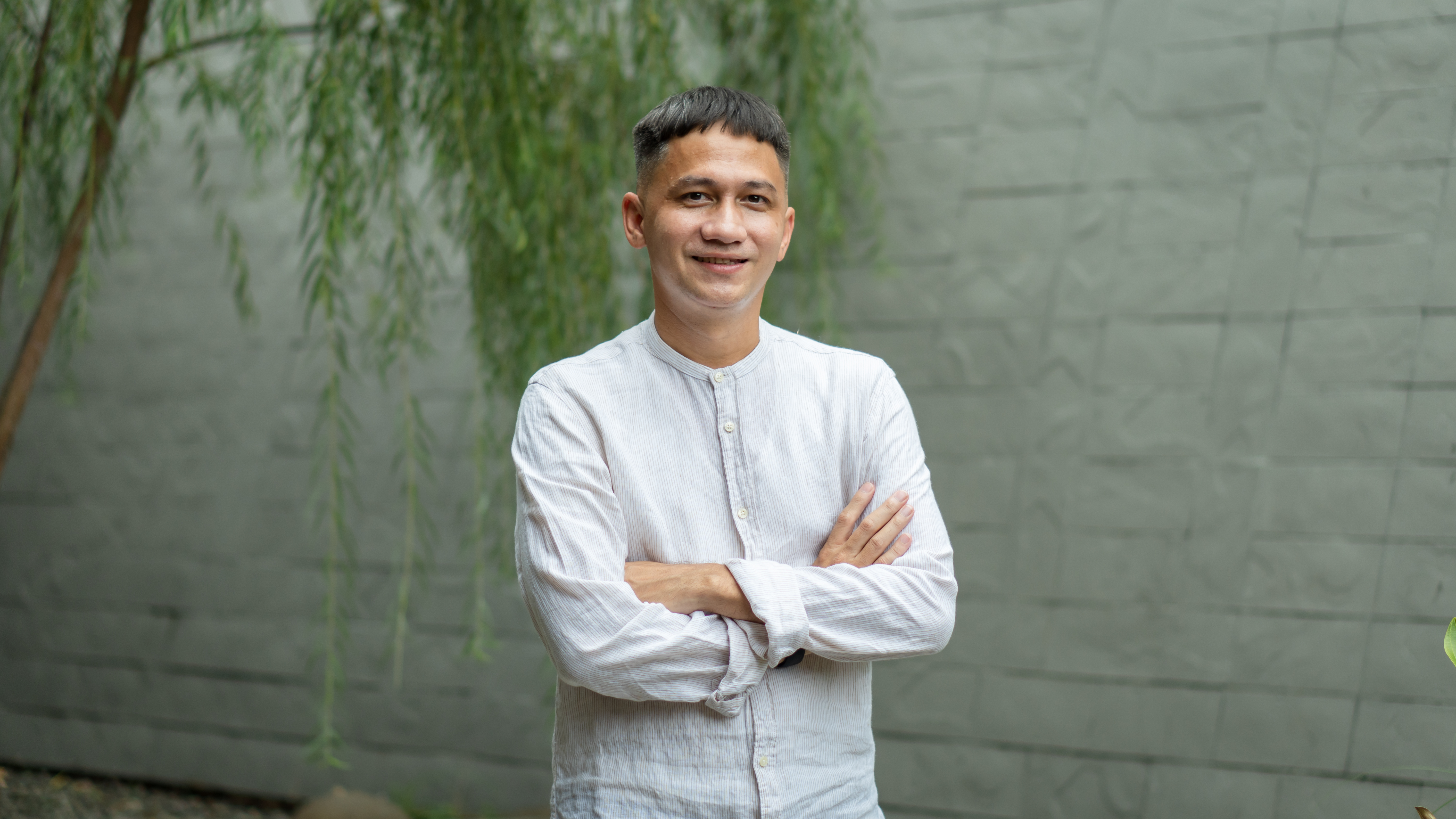
Among the diverse themes in contemporary art, the topic of post-tradition has taken center stage for Jakarta-born artist Kemalezedine.
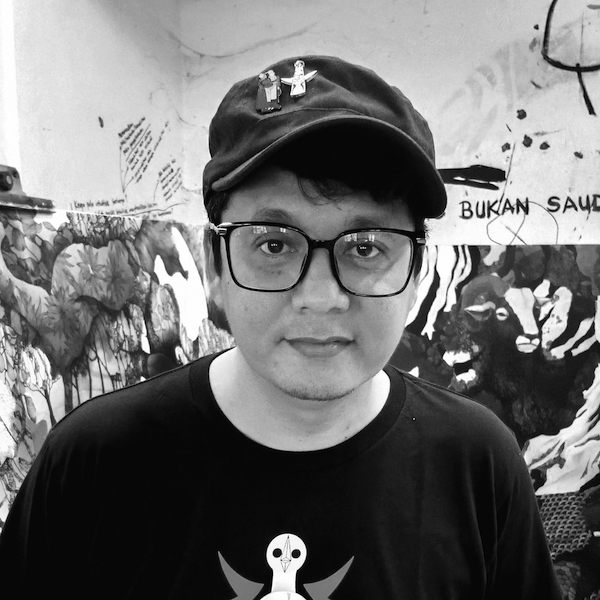
Among the diverse themes in contemporary art, the topic of post-tradition has taken center stage for Yogyakarta-based artist Kemalezedine. He even opened Lano Contemporary Art Gallery in Ubud, Bali—a region he feels is the most fitting location to explore the concept of post-tradition.
To delve deeper into this theme, read Written’s interview with Kemalezedine below.
Could you share a bit about your journey and background as an artist?
I began focusing full-time as an artist when I moved to Bali in 2011. Before that, I was based in Jakarta, creating art as a hobby and a side gig whenever I had free time from my day job. After leaving my job in 2010, I tried to focus on making art in Jakarta, but I found it quite challenging to stay focused.
Eventually, I decided to look for a place more conducive to creative work—and I chose Ubud, Bali. From that point on, things just naturally took off as I began creating and interacting within both the Indonesian and international contemporary art ecosystems.
Who are the role models that inspire your artistic style, and what are the specific reasons behind your inspiration?
I don't really have a specific style when I create art. I make work simply out of a curiosity for new ideas that emerge within artistic thinking. I love the ideas and ways of thinking of artists, critics, curators, gallerists, or art practitioners—even those that come from outside the visual art ecosystem, such as music, literature, or science, can captivate me.
You could say that every piece I create is a whole new world born out of exploring something new or unraveling the unknown. I have to get to know it, study it, feel its shape, its lines, its gestures—gathering them into a cohesive body of knowledge that then pushes me to activate my motor skills and physical actions in the creative process. This very process is what always keeps making art so fascinating to me.
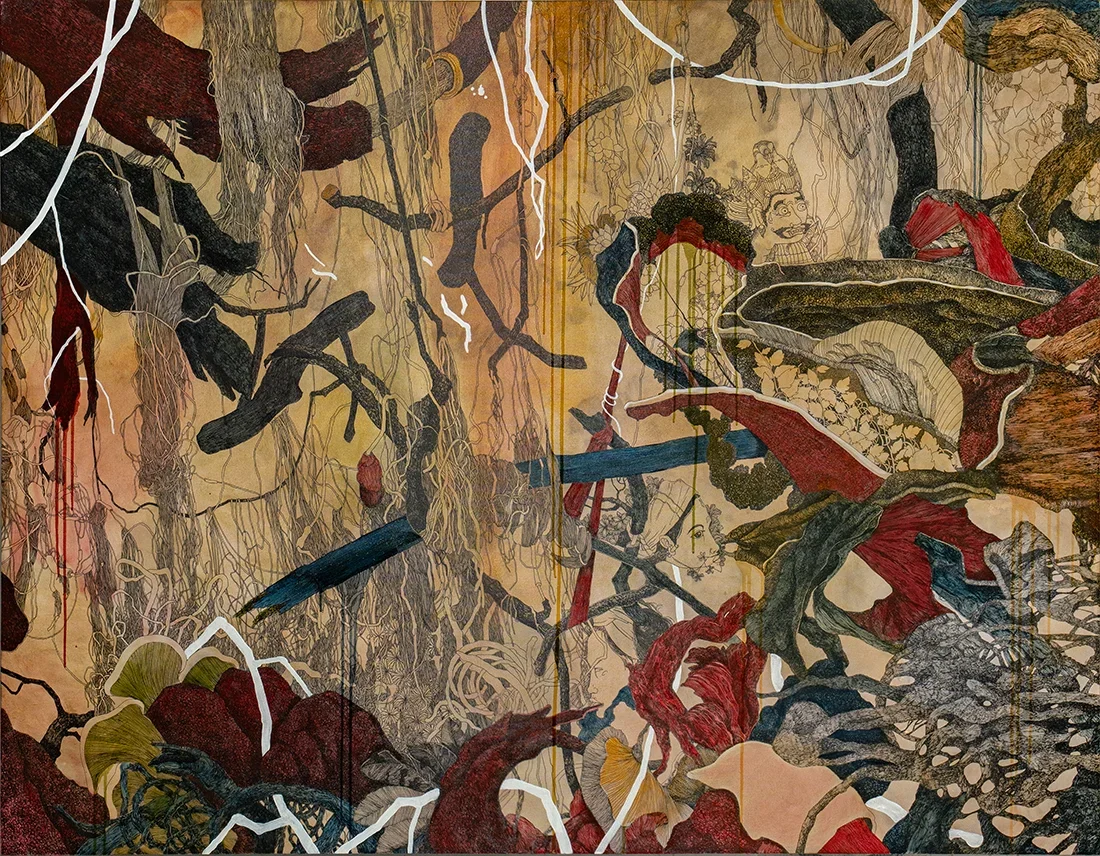
The works exhibited in Bali explore the theme of post-tradition, particularly within the Balinese context. Could you elaborate on this theme and share your own perspective?
Post-tradition is an idea or discourse that I am trying to bring to the fore within Indonesian contemporary art. Of course, I’m not doing this alone; I am supported by Pak Asmudjo Jono Irianto and Mas Army in understanding the social condition known as post-tradition.
Post-tradition refers to a situation or condition where individuals within a social framework live in modernity while continuing to embrace and practice their traditional values. Post-tradition relies heavily on aspects of space, location, or local cultural units.
The specific nature of a place's modernity is key to reading this post-traditional condition. Bali presents a uniquely fascinating case within post-tradition discourse. Empirically, Bali’s modernity still reveals a strong presence of tradition in daily life—a space where individuals live between traditional values and modern life, yet tradition no longer serves as an absolute constraint on their choices.
For instance, becoming a contemporary artist is now an open path for young Balinese people—a possibility brought about by the infiltration of modern values. As a result, we can see that Balinese contemporary art holds the potential to build a distinct identity.
Long before this term emerged, I began exploring this direction with Neo Pitamaha in 2012. Back then, together with Mahendra Yasa, Tang Adimawan, and Ketut Moniarta, we attempted to re-read the position of Balinese painting within our contemporary art landscape. In 2021, I left the collective and began focusing on the discourse of post-tradition by launching the Lano Art Project alongside Mas Army and Pak Asmudjo.
We were later joined by Elwin Mok as our business partner to establish Lano Contemporary Art Gallery—a gallery specifically dedicated to highlighting post-tradition discourses within the scope of contemporary art.
What can we learn from contemporary art, particularly in Bali? Who are some of your favorite contemporary artists (or forms of artwork)?
Contemporary art is inherently plural, embracing a broad range of differences and diverse identities. This means that contemporary art can draw from and reinterpret traditional art as a creative discourse, while allowing artists to critically reflect on the conditions within their own lives and surroundings, including broader issues affecting our world and environment. With its intellectual depth and the presence of its works, contemporary art holds an important position.
I have many favorite artists, depending on how they develop and express their ideas. It can be quite difficult to narrow it down to just one or two names, as their works each have such interesting contexts that make them favorites, or simply offer something refreshing when we engage with their work.
Some of the artists I admire include Rachel Whiteread, Jackson Pollock, Frank Stella, David Hockney, Katie Paterson, Marina Abramović, Jeff Koons, Tenmyouya Hisashi, Makoto Aida, and many others. Among Indonesian artists, I have recently been particularly drawn to Nyoman Ngendon, Murniasih, Made Wianta, and Nyoman Tjokot. There are simply too many artists I enjoy—it really depends on the context in which their work exists and how I encounter it.
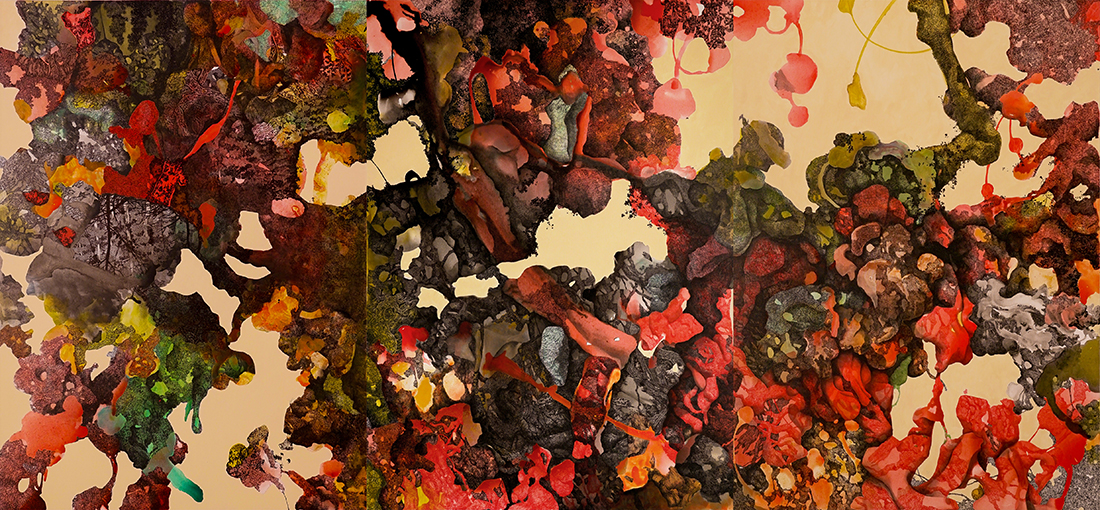
What are some of the key highlight works featured in the exhibition?
For this exhibition, I created works based on the primary mediums used in Balinese painting—such as the practice of drawing, ink work, traditional Balinese painting techniques, ornamental symbols, and canvas.
From there, I explored how these foundational traditional mediums interact with a new medium (resin) and a new form (abstract expression). It is this precise moment of convergence between mediums that I try to "freeze" as a symbol of the post-tradition condition.
What is the key takeaway you hope visitors will leave with after attending the exhibition?
I hope visitors gain a fresh perspective and actively engage with—and feel—what tradition, identity, modernity, and art itself truly mean when they visit the exhibition. Most importantly, I want them to see how visual art possesses a unique ability to capture specific human events and conditions.
In doing so, visitors can walk away with a critical reflection on these conditions and cultivate a deeper sense of empathy that they can apply to enrich their own lives.